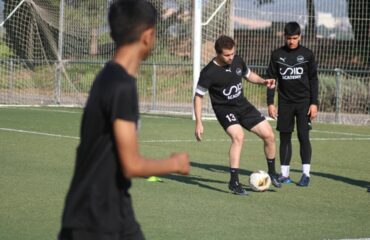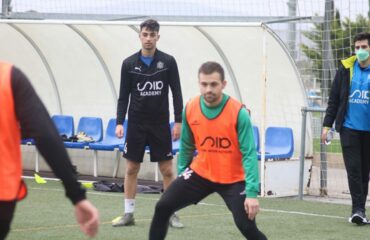




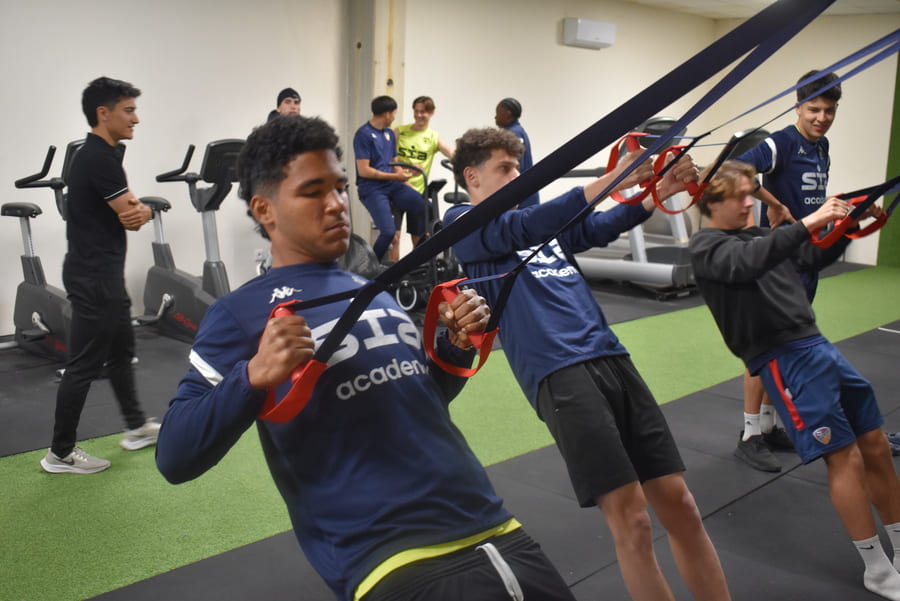

In modern football, injury prevention is just as important as improving technique or tactics. The pace of training sessions, the intensity of matches and the constant physical demands place a heavy load on the player’s body. That is why taking care of muscles and mobility through stretching has become a priority in any serious sports training plan.
At SIA Academy we understand that performance starts with health. We work on physical preparation from a global perspective, where mobility, recovery and prevention carry the same weight as work with the ball. Within this approach, well-designed routines are a key tool to reduce the risk of common football injuries.
Table of contents
Why stretching is key in football
Football combines explosive efforts, changes of direction, jumps and physical contact. If the muscles are not prepared for these actions, the risk of overloads or tears increases significantly. Good stretching helps maintain muscle elasticity and improves range of motion, two essential factors for competing safely.
Ximo, physical trainer at SIA Academy, explains it this way: “When the player works consistently on mobility, the body responds better to effort and recovers faster.” This foundation is essential to sustain performance throughout the season.
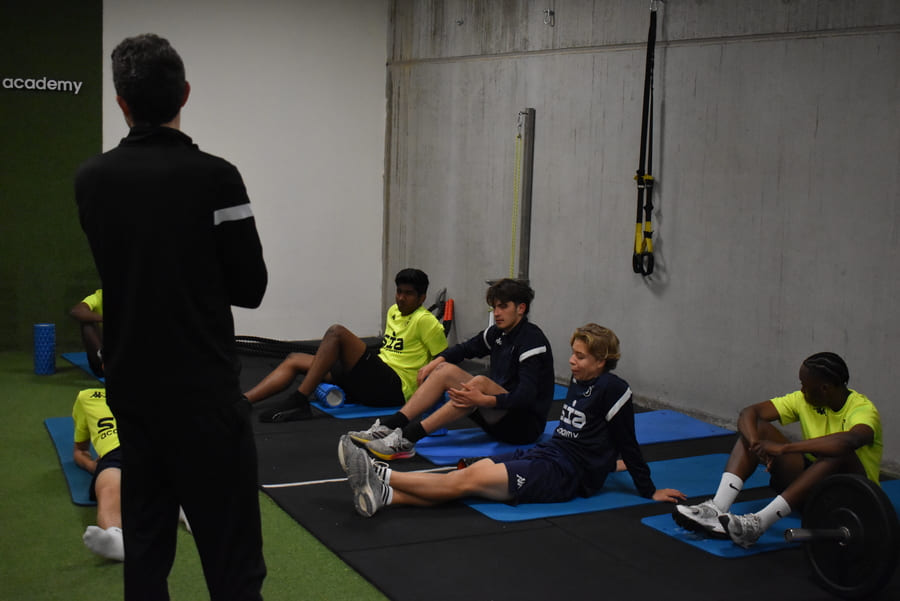
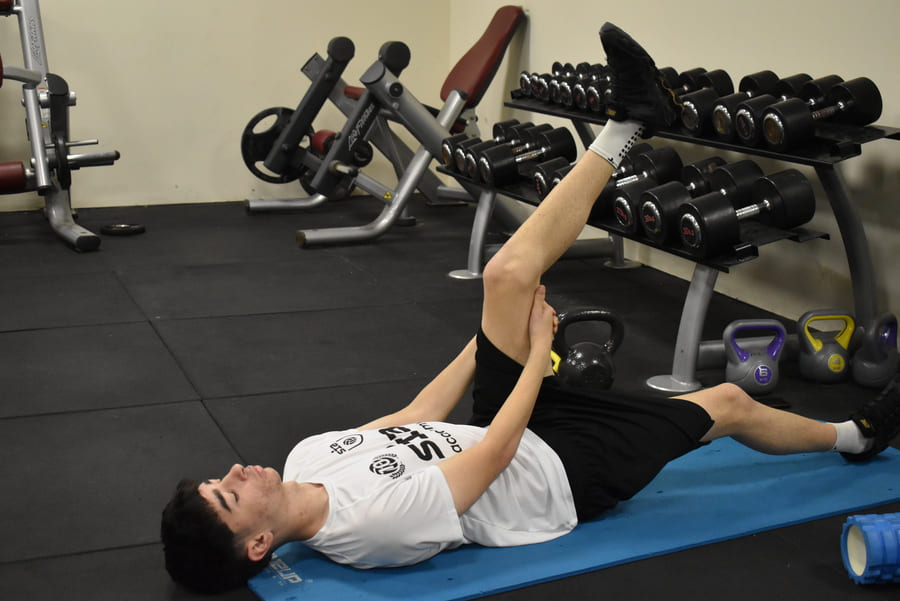
1. Hamstrings: protection for sprinting
The hamstrings are one of the most stressed muscle groups in football. Long runs, accelerations and braking actions push them to the limit in every session. This routine focuses on lengthening the posterior thigh muscles, reducing accumulated tension.
Integrating this type of stretching on a regular basis improves stride length and reduces the risk of muscle tears, especially in fast players and wingers.
2. Quadriceps: balance and stability
The quadriceps play an active role in shooting, jumping and changes of pace. When this area is overloaded, knee or anterior thigh discomfort can appear. A specific routine after training helps release tension and balance the leg muscles.
In our methodology, we place special importance on these stretches to avoid imbalances between the front and back of the thigh, a frequent cause of injury.
3. Calves and soleus: endurance and support
The calves and soleus are essential for ankle stability and running power. This routine is key to preventing issues such as Achilles tendinitis or lower-limb overload.
Proper stretching in this area improves muscular endurance and reduces the feeling of fatigue, especially during long sessions or on hard playing surfaces.
4. Adductors: groin care
Adductor injuries are very common in footballers due to changes of direction and striking the ball. This routine works on hip mobility and the elasticity of the inner thigh.
Ximo points out that “many groin problems appear due to a lack of preventive work, and well-executed stretches make the difference.” Consistency in this type of work significantly reduces injury risk.
5. Hip and psoas: the base of movement
The psoas and hip flexors often accumulate a lot of tension due to posture and repetitive football movements. Releasing this area is key to preventing lower back pain and improving overall coordination.
At SIA Academy we include these routines both in activation and cool-down phases. Mobile hips allow for more fluid and efficient movements on the pitch, which is essential in modern football.
6. Back and lower back: global stability
The back absorbs impacts, rotations and continuous loads. Working on lumbar mobility helps maintain correct posture and prevent chronic discomfort.
Back stretches promote more complete recovery, especially after intense matches or weeks with high physical demands.
How we work on prevention at SIA Academy
At SIA Academy we do not see these routines as something occasional. We integrate them in a structured way into every session, adapting them to age, level and the moment of the season. Our goal is for players to learn how to understand and take care of their own bodies.
Stretching, when applied correctly, not only prevents injuries, it also improves movement quality and physical efficiency. When the body moves better, performance increases naturally.
Ximo sums it up with a clear idea: “The player who takes care of their mobility today will compete better and for many more years.” That is the philosophy we apply every day.
A stretching habit that makes the difference
Beyond technique or tactics, sporting continuity largely depends on physical care. Regularly incorporating these six routines helps reduce common injuries and maintain an optimal level throughout the season.
At SIA Academy we believe that prevention is part of performance. Taking care of the body is not an extra, it is a necessity, and these routines are one of the pillars to achieve it.