






When it comes to identifying future top-level footballers, attention is often focused on individual technique. A good first touch, an eye-catching dribble or a powerful shot usually attracts the attention of coaches and scouts very quickly. However, talent goes far beyond those visible actions and, in many cases, the qualities that truly make the difference

In modern football, talent alone is no longer enough to guarantee success. Creative players stand out for their ability to surprise opponents, break defensive lines and find different solutions when a match seems locked. However, that imagination must be supported by psychological preparation that allows them to remain clear-headed even in the most demanding moments.

In elite football, discipline is not an abstract concept, but a daily structure that supports the entire player development process. Appears in every decision, from how the day begins to how a demanding training session is approached. In high-performance environments, discipline becomes the factor that allows talent to be transformed into consistent performance. A footballer’s
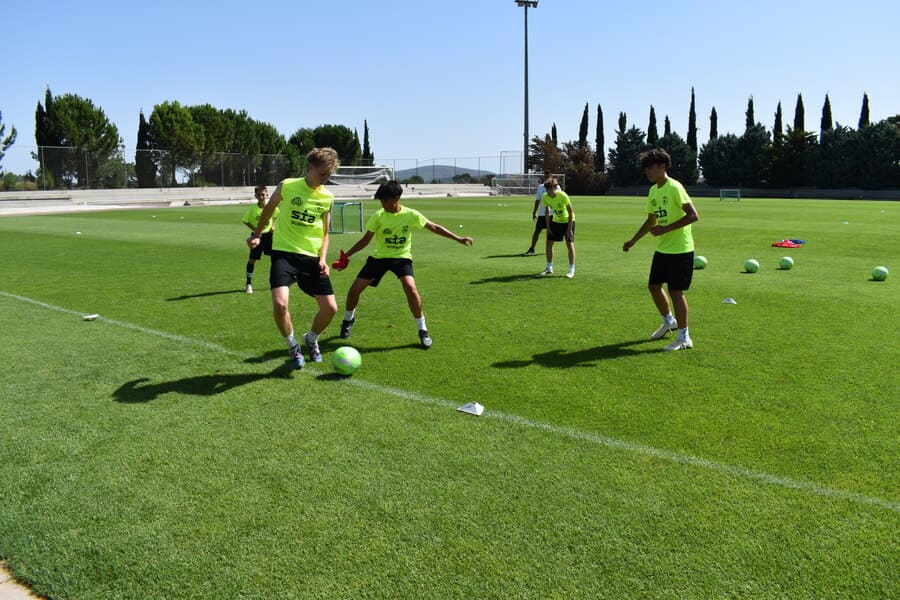
The first week of the 2026 Summer Camp has come to an end, and the feelings could not be more positive. Since June 22, dozens of young footballers have been enjoying an experience designed to improve their sporting performance, meet players from different nationalities, and make the most of every training session as an opportunity

Football is a sport where decisions must be made in a matter of seconds. Beyond technique or physical condition, there is a quality that separates many elite players: intuition. Knowing how to anticipate, detect spaces or interpret the opponent’s intentions are skills that allow players to make a difference in decisive situations. Although some people

For decades, having the ball was synonymous with dominating matches. The idea that a team with a greater ability to keep possession of the ball had a better chance of winning became a tactical reference for coaches and fans alike. However, modern football has shown that possession alone no longer guarantees control of the game

Football is a dynamic sport in which situations change constantly. The same player may be required to make decisions within seconds during a fast transition and, moments later, participate in a much slower possession phase. For this reason, mastering technique is not only about executing a movement correctly, but also about being able to apply

Modern football demands much more than talent. The difference between a player who competes on weekends and one who aspires to perform at the highest level is often found in the details they repeat every day. Habits pave the way to performance, consistency, and continuous improvement. These habits do not appear overnight; they are built

The debate about whether modern football limits or enhances a player’s creativity is increasingly common. In this context, automatisms are often seen as an element that could “robotise” the game. However, the reality is very different: when properly developed, automatisms do not reduce a footballer’s intelligence, but rather structure it, accelerate it, and make it

Taking part in a football camp is an experience that goes far beyond improving your shooting technique or physical condition. While training sessions at a regular team are usually focused on weekly competition and season objectives, these kinds of activities allow players to work on aspects that are often left out of the daily routine.