




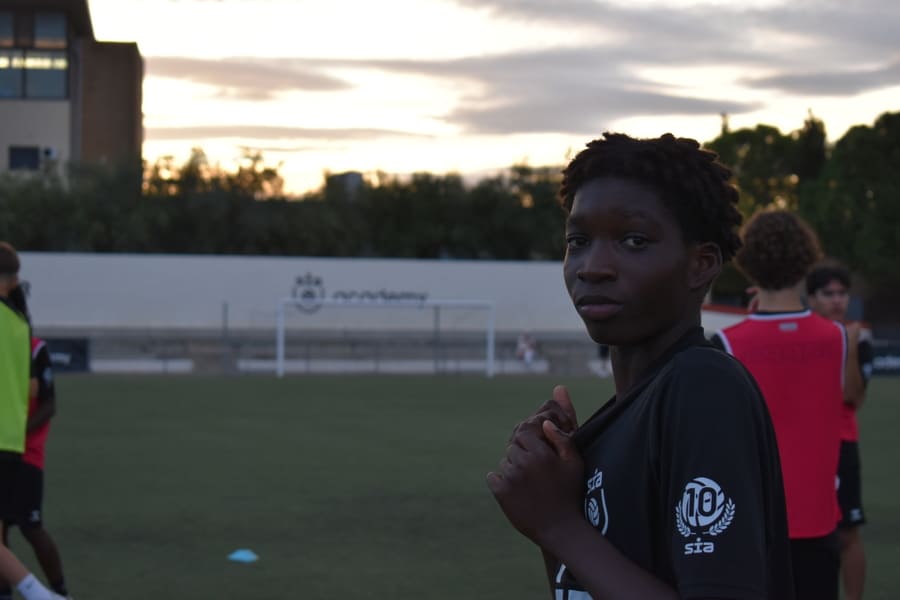

Living in an international football academy represents a transformation that goes far beyond sporting performance. A young player not only improves at a technical level but also learns to live with other cultures, take on responsibilities, and manage mindset. All of this process creates deep changes in the way they think and behave both on and off the pitch.
At SIA Academy we experience every season how footballers from different countries arrive with clear goals and end up developing a more mature way of understanding football and life. International coexistence accelerates personal growth and forces the player to step out of their comfort zone from day one.
When a footballer leaves their usual environment to move into a sports residence, they must adapt to strict schedules, demanding training sessions, and rules of coexistence. This routine modifies habits, priorities, and ways of working.
Table of contents
The adaptation and mindset in an international environment
The first days are usually the most difficult. Many players must get used to a new language, different training methods, and teammates from different cultures. This situation strengthens the mindset because it forces them to react to the unknown.
Daily competition increases emotional demand. In an international academy everyone wants to play, stand out, and progress, which forces players to develop a stronger mindset to handle pressure.
At SIA Academy we promote an environment where the player grows both sportingly and personally. For us, holistic development is just as important as performance on the pitch. International coexistence fosters an open and flexible mindset.
José Luis, the academy psychologist, explains this process: “A young player’s mindset is built in moments of pressure, not in comfortable moments.”

Coexistence and personal growth
Sharing a residence with other footballers changes the way players relate to others and face problems. They learn to organize their time, respect rules, and maintain discipline day by day.
Many young players arrive depending on their family environment for everything, but life in an international academy forces them to develop autonomy. This process gradually strengthens the player’s mindset.
At SIA Academy we support players throughout their adaptation. Our goal is to help them grow in a demanding but safe environment, which allows them to develop a stable and balanced mindset.
In addition, living with ambitious teammates creates constant motivation. Seeing the daily effort of other players reinforces a competitive mind that pushes them to improve continuously.
The psychological impact of high performance
One of the most important changes appears in the way players deal with mistakes. In elite football there is no time to collapse after an error, so mindset becomes key to reacting quickly.
Intense training sessions teach players to manage pressure and maintain focus even in difficult situations. This strengthens the player’s mindset in high-demand contexts.
José Luis summarizes it like this: “A player’s confidence depends directly on their mindset when things are not going well.”
At SIA Academy we work on the psychological aspect as a fundamental part of player development, because a strong mindset makes a real difference in performance.
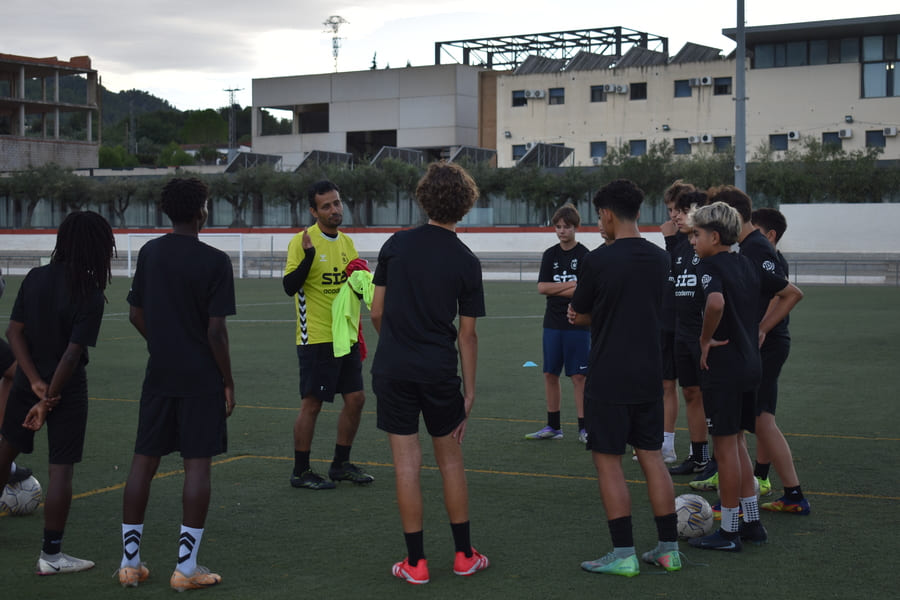
Discipline as the foundation of the future
Over time, players understand that performance does not depend only on training, but also on rest, nutrition, and daily consistency. This transforms their mindset toward a more professional outlook.
Discipline stops being an external obligation and becomes a personal improvement tool. The player’s mindset becomes more structured and focused on the long term.
At SIA Academy we observe that the players who progress the most are those capable of maintaining a consistent mindset even in difficult moments.
Learning that lasts
The experience of an international academy leaves a lasting impact. Players learn to live with different people, manage emotions, and take on responsibilities independently.
The mindset developed during this stage not only improves sporting performance but also helps them face life with greater maturity.
True growth happens when the player understands that progress depends as much on attitude as on talent.