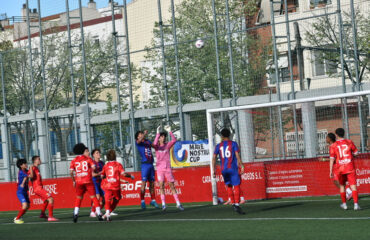




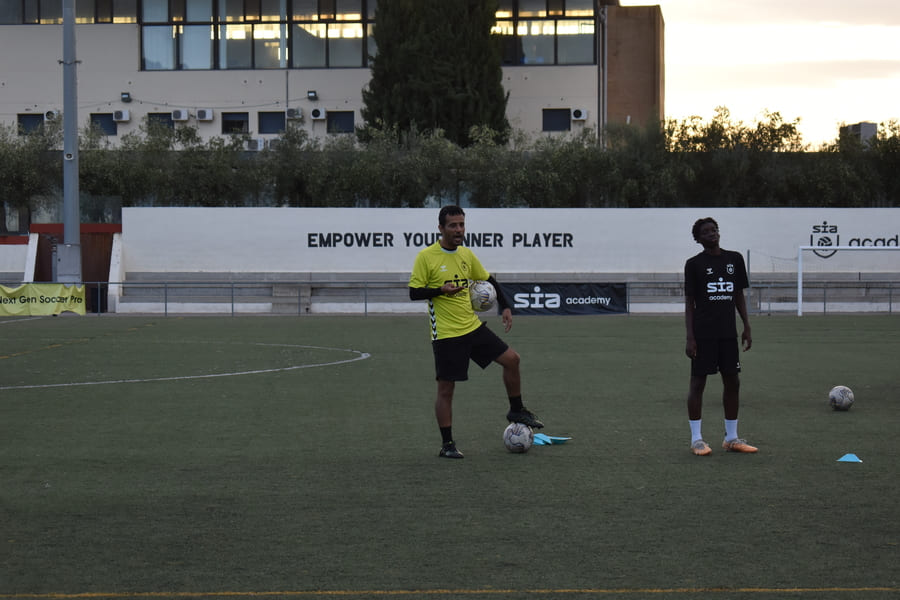

Modern football is increasingly decided far away from the ball. The speed of the game, the tactical quality of opponents and the amount of available information mean that anticipating actions has become a differential skill. In this context, intelligent positioning has become one of the most decisive keys to interpreting and neutralising the opponent’s plays before they happen. It is not just about running more or being physically fitter, but about occupying the right space at the right moment.
The concept of positioning goes far beyond a static location on the pitch. It involves reading the game, understanding the opponent’s intentions and synchronising with teammates. A tactically well-oriented footballer is able to close passing lanes, provoke mistakes and buy time to reorganise the team. Proper positioning transforms defence into attack and allows control of the rhythm of the match.
Table of contents
Anticipation as a result of tactical understanding
Anticipating is not guessing: it is interpreting patterns. Teams work during the week to recognise recurring opponent behaviours and adjust their placing collectively. When a player understands how the opponent moves, they can get ahead of the play without needing direct contact. In this way, positioning becomes a tool for saving energy and improving defensive efficiency.
José Luis, coach at our academy, sums it up clearly: “A player who masters positioning arrives earlier without running more. That is intelligence applied to the game.” This view reinforces the idea that positioning does not depend solely on innate talent, but on a well-structured training process.
The role of positioning in the different phases of the game
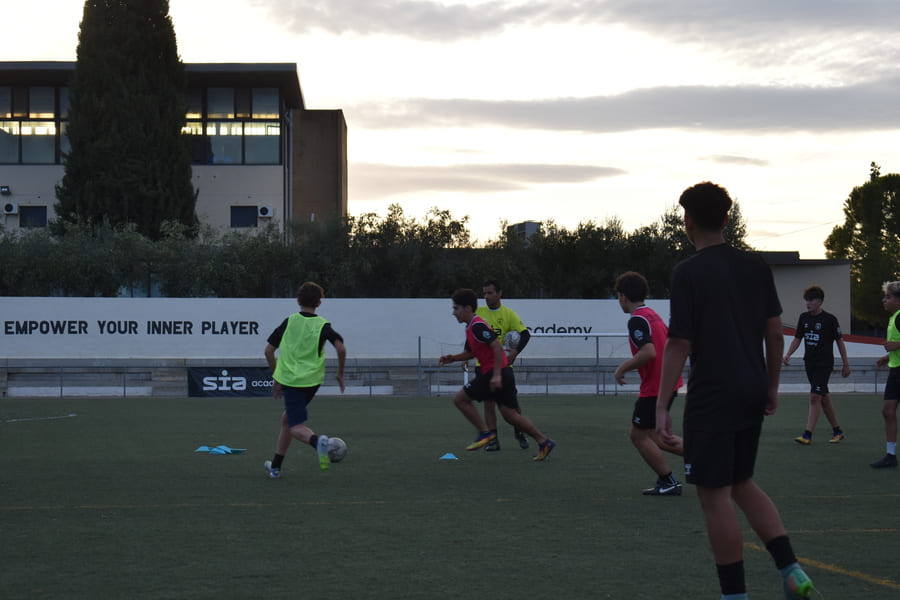
In the defensive phase, positioning organises the team and reduces dangerous spaces. In the attacking phase, it facilitates passing lanes and creates overloads. Transitions are the moments where intelligent positioning makes the difference, as it allows players to react before the opponent. Good positioning after losing the ball can stop a counterattack; correct placing after regaining possession can launch a clear goal-scoring opportunity.
Positioning also varies depending on the role. A centre-back needs to master it to reduce space behind the line, while a midfielder uses it to constantly offer support and balance the team. In both cases, decision-making is based on prior reading of the environment.
Comprehensive training and applied methodology
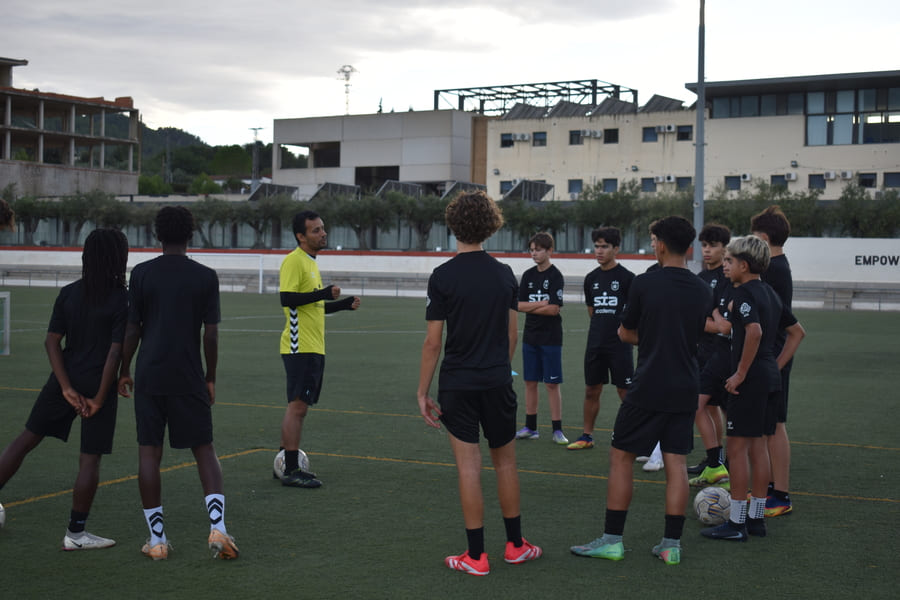
At SIA Academy we work on positioning from a global perspective. We believe that tactical intelligence is trained from an early age, integrating concepts of analysis, perception and decision-making. Our approach combines specific tasks, video analysis and real game situations so that the footballer internalises positioning as a natural habit.
José Luis highlights this training process: “At SIA Academy we insist that placing is a collective responsibility. When one player fails, the team feels it; when everyone gets it right, the opponent feels uncomfortable.” This philosophy strengthens group cohesion and raises the competitive level.
The impact on individual performance
A player with good placing seems to play with more time and space. This improves confidence and reduces the margin for error. In addition, footballers who master this aspect tend to adapt better to different systems and tactical demands. Positioning thus becomes an added value for their sporting development.
At SIA Academy we observe how mastering placing accelerates football maturity. By understanding the game, the player makes better decisions under pressure and becomes more consistent in performance. This learning not only benefits the team, but also prepares the footballer for more demanding competitive contexts.
Thinking before acting
Football rewards those who think faster, and placing is the foundation of that advantage. Anticipating the opponent’s plays is not a matter of intuition, but of training, analysis and constant practice. Intelligent positioning organises the chaos of the game and allows competition at the highest level with greater guarantees.
At SIA Academy we continue to commit to an education that prioritises understanding the game. From our experience, positioning is not just another tactical detail, but a fundamental pillar for building complete footballers, capable of reading the match and getting ahead of what is to come.