




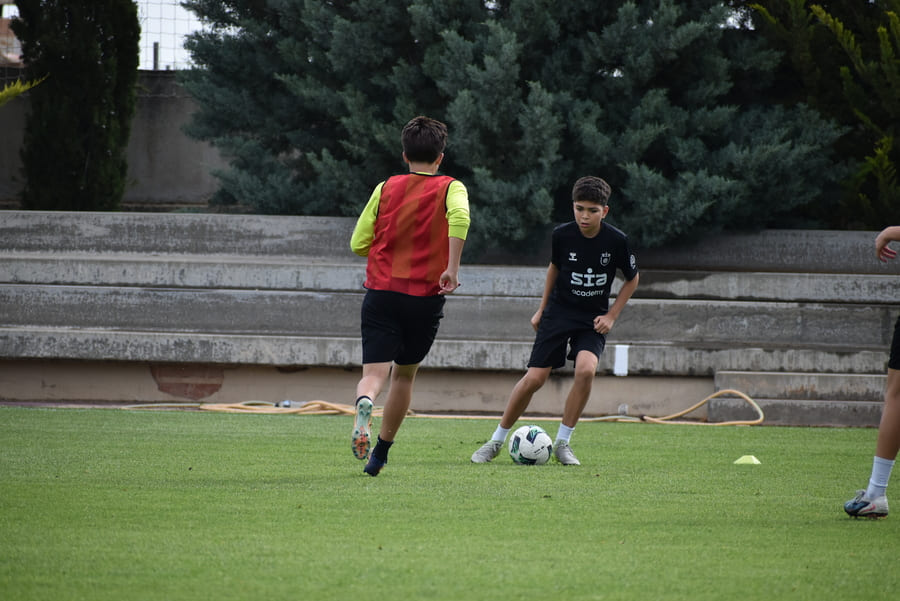

In the development of a young footballer, the learning process is inevitably linked to the appearance of error. Far from being an obstacle, error constitutes an essential tool for the player’s technical, tactical, and emotional growth. Understanding its value and knowing how to manage it makes the difference between a limited training environment and a truly transformative one.
From the earliest stages, the young athlete faces new situations: imperfect controls, late decisions, or incorrect readings of the game. Each error represents a concrete opportunity to adjust behaviors and improve performance. However, this only happens when the educational context encourages reflection rather than punishment.
Table of contents
The importance of normalizing learning
One of the greatest challenges in sports training is eliminating the fear of making mistakes. Many young players avoid taking risks due to fear of failure, which limits their creativity and development. Normalizing mistakes as a natural part of learning allows the footballer to feel free, fostering a more open and braver mindset.
In our experience at SIA Academy, we actively work so that the player understands that every situation has a formative purpose. It is not about avoiding mistakes at all costs, but about interpreting them correctly. We analyze game situations, review specific actions, and support the footballer in understanding what happened.
As José Luis, academy coach, points out: “Error is not the end of the play, it is the beginning of learning”. This perspective completely changes the way players perceive their mistakes.
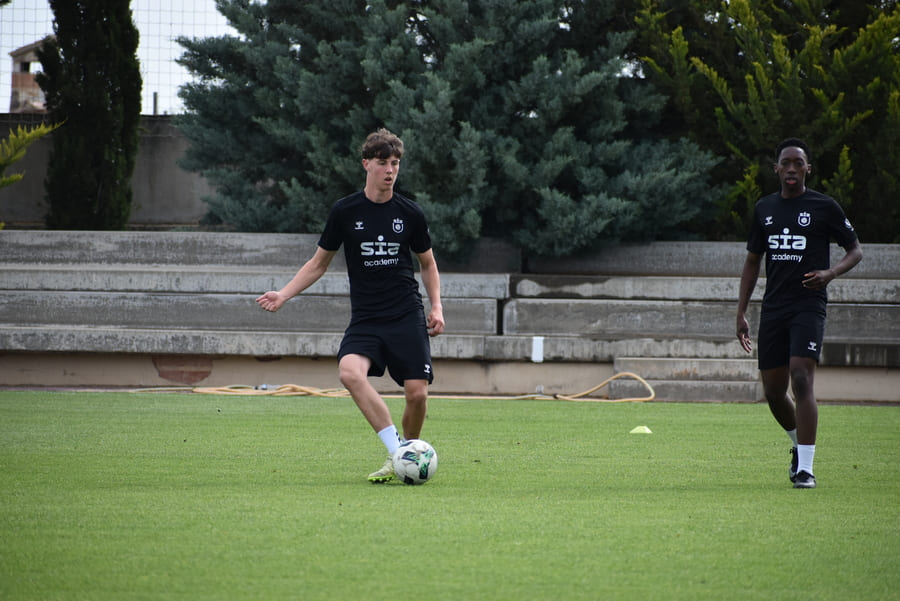
Error as a pedagogical tool
Modern training cannot focus solely on mechanical repetition. It is necessary to create contexts where the player can experiment and adapt to different scenarios. Designing tasks that generate complex situations is a key pedagogical strategy.
For example, in numerical superiority or inferiority drills, the footballer is forced to make quick decisions. In this process, error naturally appears and becomes an element for later analysis. This approach fosters tactical intelligence and problem-solving ability.
At SIA Academy, we apply methodologies where the player is the protagonist. We guide, but it is the footballer who discovers, corrects, and evolves from each experience. This active learning has a much deeper and longer-lasting impact.
Emotional management of the player
Not all players react the same way to a mistake. Some accept it naturally, while others experience frustration or anxiety. Therefore, emotional management is just as important as technical training.
We work to help the player develop resilience, understanding that it is part of the path to success. The key lies in how one responds: do they abandon the action or try again with greater knowledge?
José Luis summarizes it clearly: “A player who fears error stops trying, and a player who stops trying stops growing”. This mindset is fundamental in formative stages.
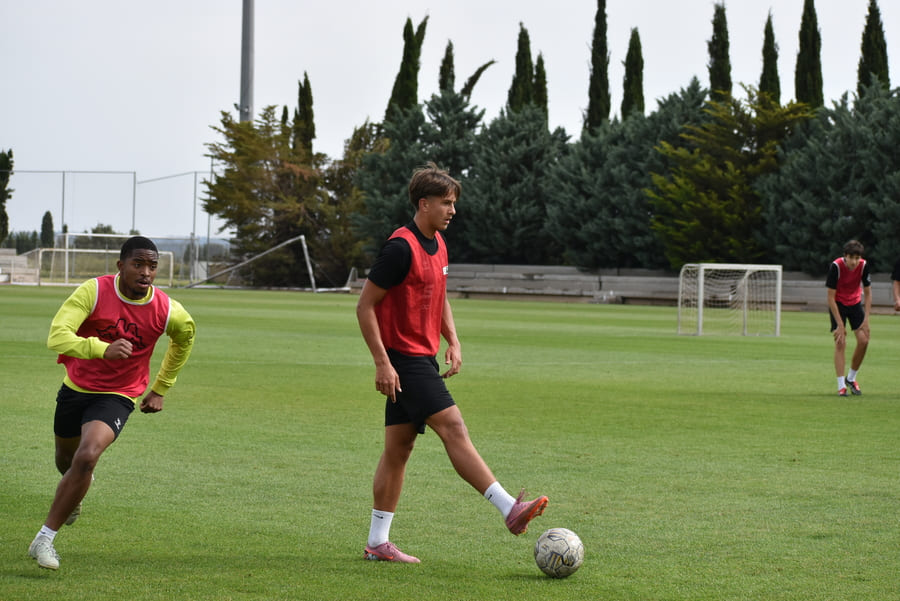
The role of the coach in learning
The coach has a decisive influence on the player’s perception. An approach based on constant criticism can generate insecurity, while a constructive attitude enhances the footballer’s confidence.
Feedback must be clear, specific, and improvement-oriented, not judgmental. Instead of simply pointing out what was done wrong, it is more effective to explain why and offer alternatives. This type of communication strengthens the coach-player relationship and promotes a positive learning environment.
At SIA Academy, we are committed to close support. We understand that each situation is an opportunity to teach, not to punish. This approach creates an environment where the player feels safe to take risks and learn.
Learning in competition
Competition is the scenario where decisions gain greater relevance. A misplaced pass or a poor choice can have immediate consequences on the result. However, it is precisely in this context where learning becomes more meaningful.
The player must learn to live with these situations during the match, without letting them negatively affect subsequent performance. The ability to mentally “reset” after a failed action is a key skill in modern football.
In our methodology at SIA Academy, we work on real game situations so that the footballer experiences different scenarios in controlled competitive contexts. This facilitates the transfer of learning to the match.
Error is not an enemy of learning, but one of its fundamental pillars. Integrating it consciously into the training process allows the development of more complete, autonomous, and resilient players.
Changing the perception of mistakes transforms the way of training and competing. When the footballer understands that making mistakes is part of the journey, they dare more, learn better, and evolve faster.
At SIA Academy, we firmly believe in this approach. We are committed to a model where learning arises from experience, supporting the player at every stage of their development. Because training footballers is not about preventing them from failing, but about teaching them to grow at every step of the way.