




Football has evolved enormously over the last few decades. Physical preparation is more demanding, tactical analysis is more detailed, and teams seek to optimize every action on the pitch. Within this evolution, one of the concepts that has gained the most relevance is positional football, an idea that often seems complex for those unfamiliar with tactical language.
However, understanding this model does not have to be difficult. The positional concept is based on simple principles that help teams occupy space better, create advantages, and control the development of matches. Rather than being a collection of predefined movements, it is a way of interpreting the game and making intelligent decisions.
Table of contents
What positional football really means
When we talk about positional football, we refer to a collective organization in which each player occupies specific spaces to favor ball circulation and create imbalances in the opponent.
The main idea is to distribute players in such a way that the team always has passing options available. Instead of constantly chasing the ball, players position themselves strategically to offer solutions to the teammate in possession.
The positional model aims for the ball to move quickly and for the team to maintain a balanced structure both in attack and defense. Correct space occupation allows individual qualities to be better used within an efficient collective system.
For this reason, the objective is not for all players to constantly move, but for each movement to have a clear purpose within the overall structure.
The importance of space
To understand positional football, it is essential to understand that football is largely a battle for control of space.
Whenever a team manages to create superiority in certain areas of the pitch, its chances of progressing toward the opponent’s goal increase. The positional approach seeks precisely to create these advantages through a rational distribution of players.
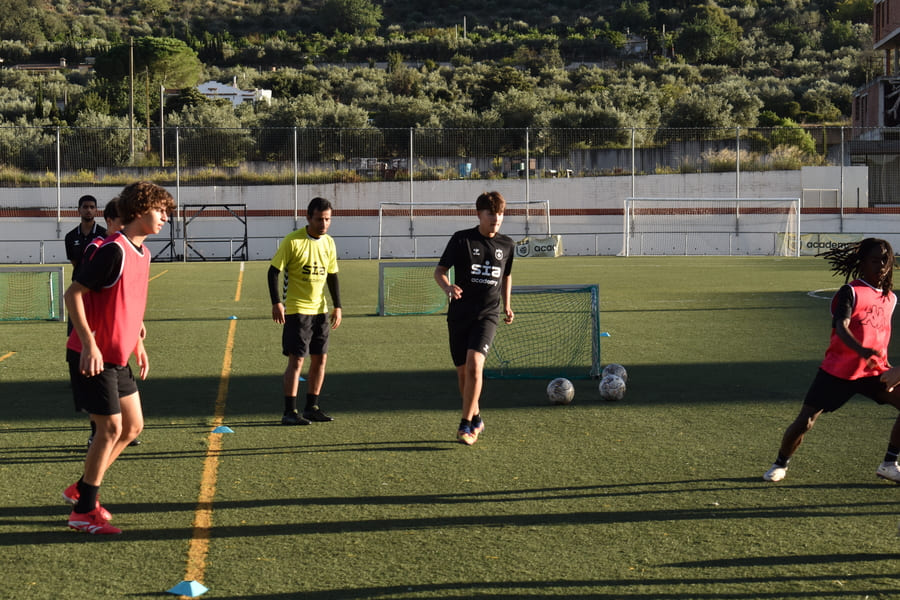
For example, when a winger stays wide near the touchline, it forces a defender to cover that area. That simple action can free up central spaces for other teammates to exploit.
The ball usually moves faster than any player, so a good spatial structure can be more effective than an accumulation of individual runs and efforts.
The positional model aims for each player to understand how their positioning influences both teammates and opponents.
Why it requires tactical intelligence
One of the most interesting aspects of positional football is that it forces players to constantly interpret what is happening during the match.
It is not just about memorizing fixed positions. Every situation requires adjustments depending on the ball location, opponent movements, and team needs.
The positional system encourages players to develop a deeper understanding of the game. They learn when to occupy certain spaces, when to leave them, and how to connect with teammates to maintain collective balance.
The best teams are not only distinguished by technical quality, but also by their players’ ability to understand and apply complex tactical concepts naturally.
For this reason, tactical training has become an essential element in the development of young footballers.
How we work on it at SIA Academy
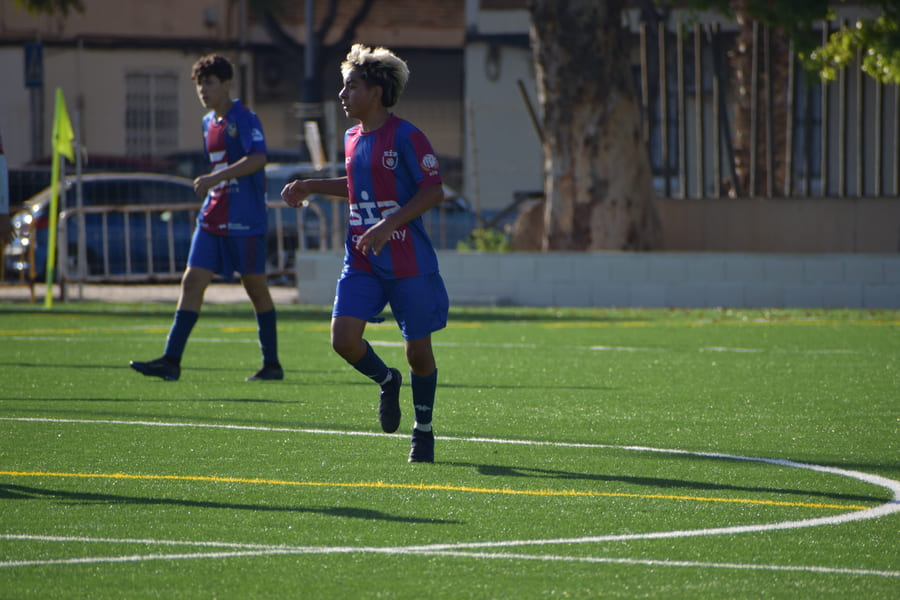
At SIA Academy, we believe that tactical education should be part of a player’s overall development. That is why we incorporate concepts related to positional football into our training and development processes.
Our goal is not only for players to know certain game structures. We aim for them to understand why certain situations occur and how they can find solutions on the pitch.
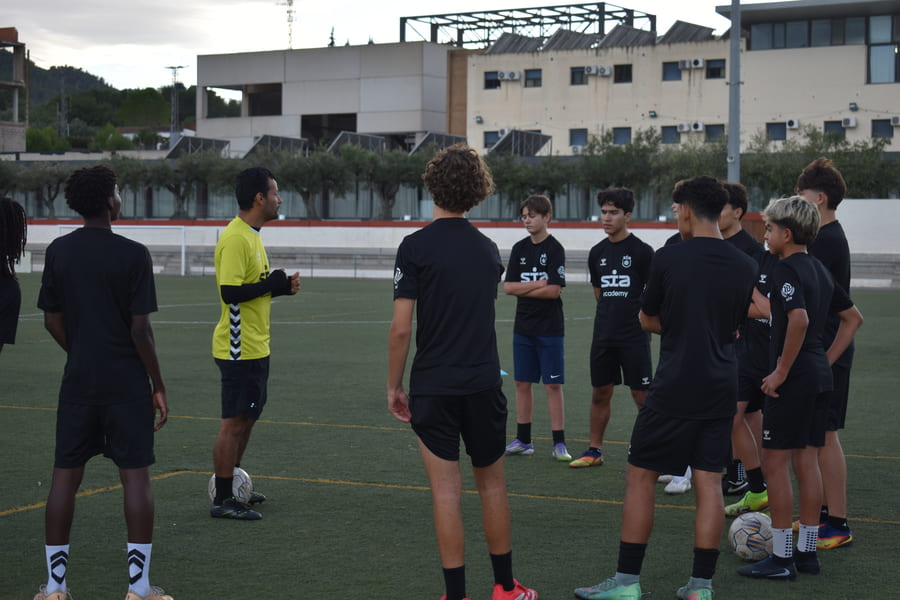
We use adapted exercises for different ages and levels, allowing players to gradually internalize the principles of the positional model. In this way, learning becomes more natural and easier to apply in real competitive contexts.
Alain, coach at the academy, explains this philosophy:
“Understanding space allows the player to make better decisions even before receiving the ball.”
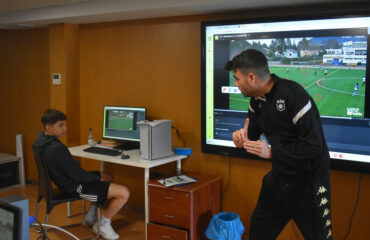
In addition, we encourage every footballer to actively participate in game analysis in order to develop a more complete and autonomous tactical vision.
A concept that is increasingly present
Although the term positional has become especially popular in recent years, many of its principles have been part of elite football for decades.
What has changed is the depth with which these concepts are studied and applied. Today, coaches around the world use technological tools and advanced methodologies to refine aspects related to spatial organization and decision-making.
Alain summarizes this evolution with a simple reflection:
“When a team understands where each player should be, the game flows much more naturally.”
At SIA Academy, we believe that understanding positional football helps players better interpret the sport and develop resources that will be valuable throughout their careers. That is why we are committed to a training model that combines technique, tactics, and game understanding, preparing players for the demands of modern football.