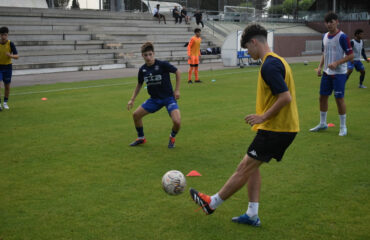




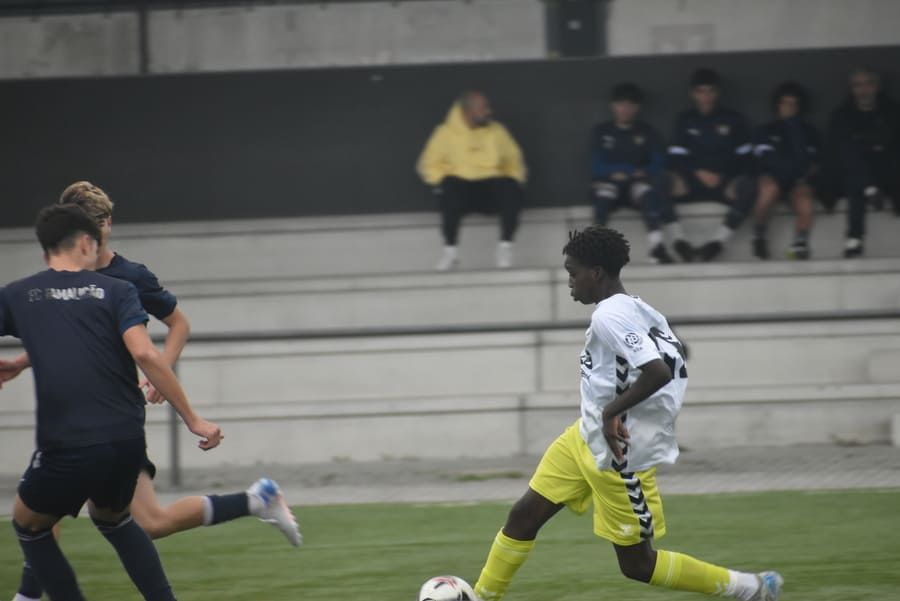

Modern football is defined by speed, precision, and the ability to interpret moments within the game. In this context, offensive transitions have become one of the most decisive tactical resources to surprise any opponent. Taking advantage of the exact moment after regaining possession allows teams to create advantages that are difficult to defend, even against well-organised sides.
Well-executed transitions do not rely solely on running forward quickly. They demand collective awareness, coordination, and intelligent decision-making. A team that masters this concept is capable of changing the rhythm of a match in seconds and punishing the opponent before they can reorganise defensively.
Table of contents
Understanding the moment to attack
One of the biggest mistakes when talking about offensive transition is reducing it to a vertical counterattack. In reality, the key lies in recognising when to accelerate and when to pause, depending on the context. After regaining possession, the player must interpret whether there is a numerical, spatial, or positional advantage.
The best transitions are born from active defending. Pressing well, adopting the correct body orientation, and directing the recovery toward favourable areas make it easier for the first offensive pass to be clean and effective. From there, the team must move as a compact, aggressive unit.
In high-level football, transitions make the difference in evenly matched games. A single opponent imbalance can turn into a clear goal-scoring chance if the attacking team acts with conviction and clarity.
Tactical principles to surprise the opponent
For offensive transitions to truly be surprising, they must be supported by clear principles. The first is functional verticality: moving forward quickly, but with purpose. Running without direction does not create danger; making good decisions does.
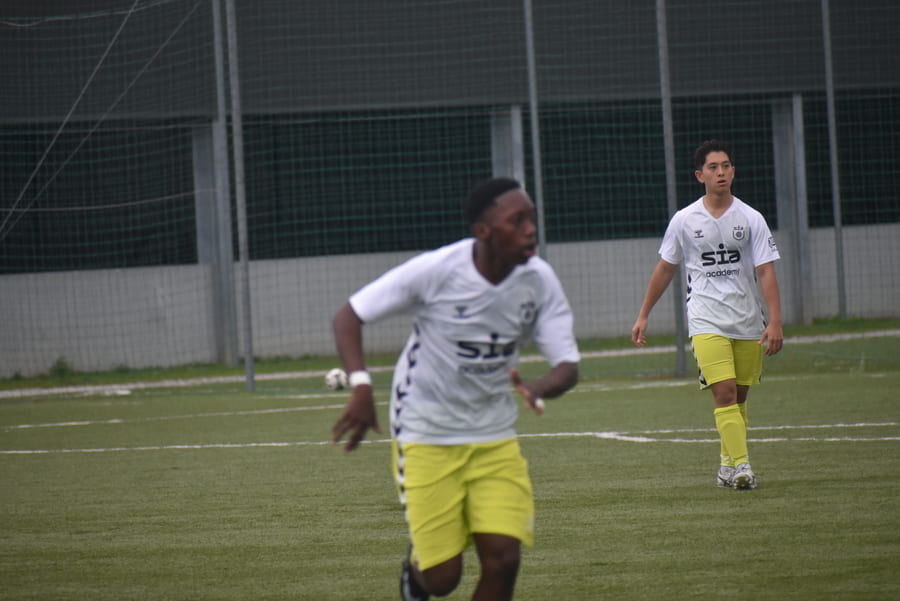
Another fundamental principle is rational occupation of space. While one player carries the ball, others must make supporting runs to offer passing options. Well-synchronised width and depth disorganise any defence that is still in the process of retreating.
The role of the player who initiates the transition is also crucial. The first pass after regaining possession is often the most important, as it determines the speed and quality of the attacking action. For this reason, teams specifically train these situations during practice.
The mental component of transitions
Beyond the tactical aspect, transitions require a specific mindset. The footballer must switch from defending to attacking in fractions of a second. This change of mindset is as psychological as it is football-related. Concentration and bravery directly influence the success of the action.
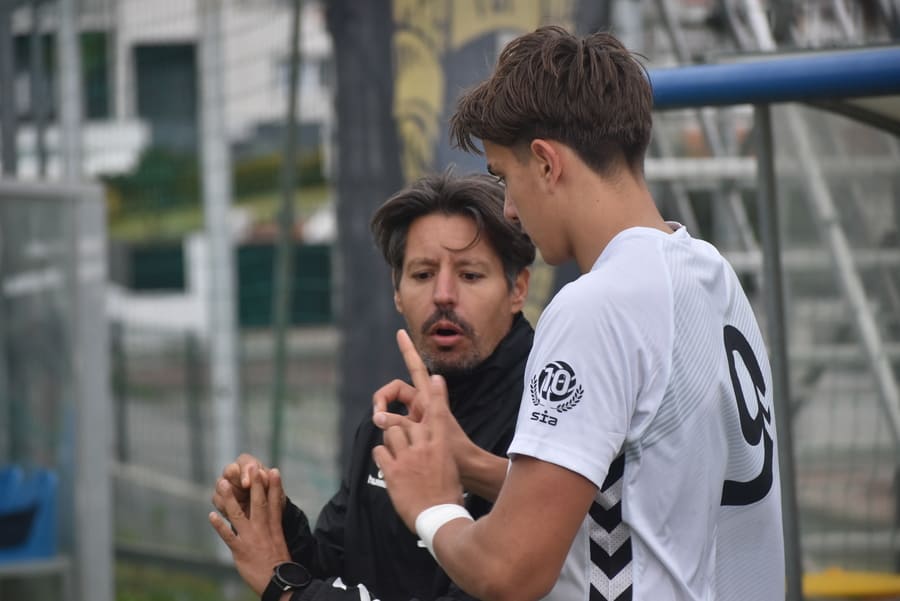
In this regard, José Luis, coach at our academy, often reminds us: “The transition doesn’t start when you attack, it starts when you mentally decide that you want to hurt the opponent.” This vision reinforces the idea that the game never stops; it only transforms.
Furthermore, player confidence is decisive. Daring to carry the ball forward, play a penetrating pass, or finish quickly depends on feeling prepared to take risks at key moments.
Our methodology at SIA Academy
At SIA Academy, we place central importance on working on offensive transitions within our training model. We understand that real football is decided in chaotic moments, and that is why we train our players to stand out in them.
We design tasks where ball recovery automatically triggers an attacking behaviour. We aim for the player to think and act forward without losing judgement, interpreting the game rather than executing actions mechanically.
José Luis sums it up this way: “If the player understands the transition, they understand the game; because that’s where you see who decides quickly and well.” From this perspective, we work on tactical, cognitive, and emotional aspects together.
At our academy, we encourage constant communication and individual responsibility within the collective. Each player knows which role to assume in a transition, depending on their position and the characteristics of the moment. This allows us to develop adaptable and competitive footballers.
Training to compete better
Transition training cannot be isolated. It must be integrated into a global game model. At SIA Academy, we connect the defensive phase with the offensive one naturally, avoiding rigid separations.
We use reduced spaces, numerical superiorities and inferiorities, and variable stimuli. In this way, the player learns to make decisions under real pressure, improving both speed of thought and execution.
In addition, post-training analysis is essential. We review specific situations so that the footballer understands what was done well and what can be improved. We turn every transition into a practical lesson, directly transferable to match situations.
Offensive transitions are much more than a phase of the game; they are a constant opportunity to make the difference. The team that best interprets these moments gains a huge competitive advantage, regardless of the opponent.
Surprising the rival is not a matter of chance, but of work, understanding, and mindset. At SIA Academy, we are committed to developing players capable of reading the game and attacking at the right moment. Because mastering transitions means mastering the rhythm of modern football.