




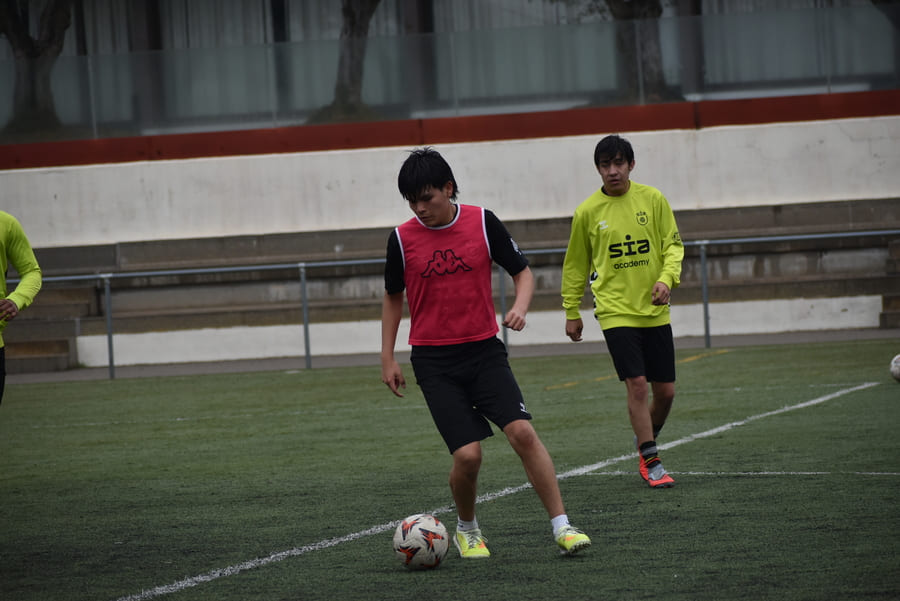

In modern football, identifying when a footballer is ready to step into a more demanding environment is essential for development. At SIA Academy, we work daily with this objective, focusing not only on performance but also on competitive maturity. A player who aims to progress must understand that the next level demands consistency, intelligence, and constant adaptation. In our training environment, we analyse every detail to detect that stage of evolution.
Progress does not depend only on talent. A player may stand out in their category, but that does not automatically mean they are ready for a higher challenge. We assess technical, mental, and physical aspects in a global way to guide that process professionally. As José Luis, one of our coaches, explains: “The jump to the next level is not defined by one good match, but by the ability to repeat performance over time.” In this context, the competitor begins to show clear signs of readiness.
Table of contents
Consistency in performance
The first signal is consistency. A player who maintains stable performance in training sessions and matches demonstrates readiness for higher demands.
Consistency is what separates occasional talent from professional-level reliability. A player who shines only sporadically has not yet reached the necessary balance.
At SIA Academy, we analyse how a competitor responds to different levels of competitive pressure. When consistency appears, we understand that the development process is on the right track.
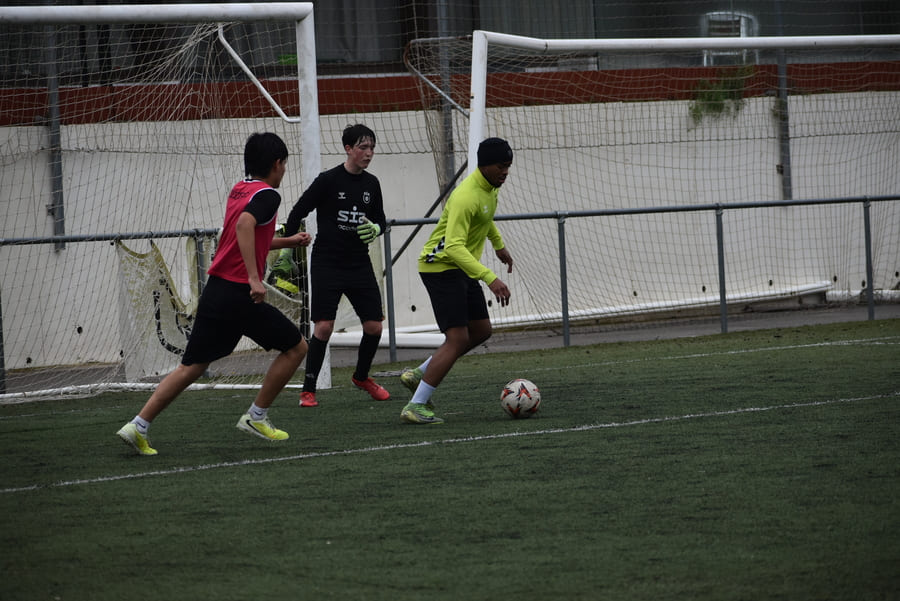
Strong competitive mentality
The second signal is mentality. A player ready to move forward does not settle for participation; they want to influence the game. That controlled ambition is essential.
A competitor with a strong mindset looks for solutions even in difficult contexts. We observe how they react to mistakes, refereeing decisions, or moments of adversity. That response defines maturity.
José Luis puts it simply: “The mind of a player is more important than their legs when the match becomes difficult.” At SIA Academy, we reinforce this idea constantly.
When a player transforms frustration into positive energy, they are closer to competing at higher levels.
Tactical adaptability of the player
The third signal is understanding of the game. A competitor who is ready for the next step can adapt to different systems and roles without losing effectiveness.
In our methodology, we create varied scenarios so the player can adjust to different playing styles. Tactical flexibility is essential in modern football.
A player who only performs well in one structure still has development ahead. However, when they can interpret multiple roles, their competitive value increases significantly.
At SIA Academy, we encourage players to think beyond their usual position, accelerating their growth.
Emotional maturity in competition
The fourth signal is emotional control. A competitor who manages emotions in high-pressure matches shows advanced readiness.
Emotional balance leads to better decision-making under pressure. We observe how the player reacts in critical moments, both positive and negative.
An immature player may lose focus after an error, while a prepared one maintains concentration. This difference is key for progression.
As José Luis says: “A mature player is not the one who never makes mistakes, but the one who keeps playing the same way after the mistake.” In our environment, this is a priority.
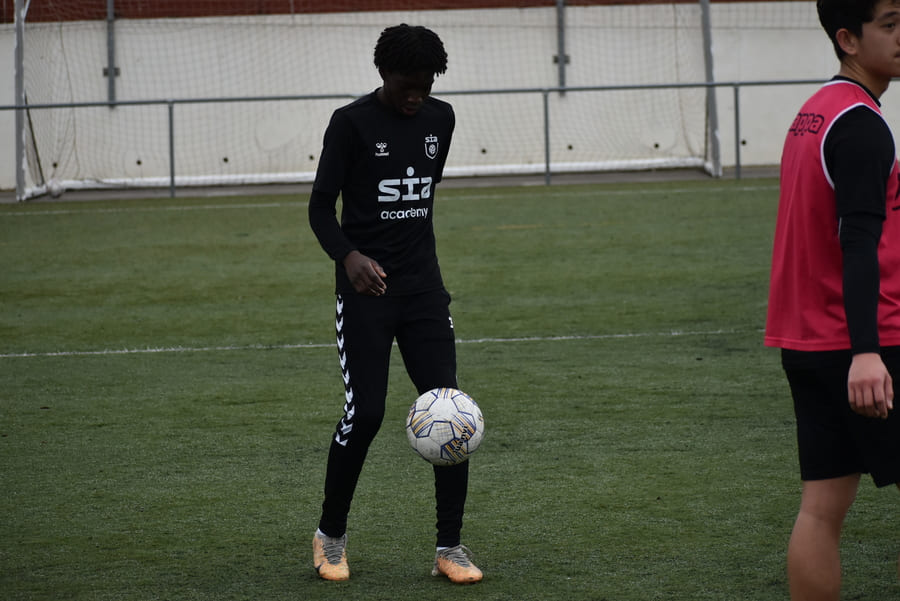
Physical condition aligned with demands
The fifth signal is physical level. A player ready to move up must sustain higher intensities for longer periods.
At SIA Academy, we evaluate endurance, speed, and recovery capacity as key indicators. The body must be prepared for greater demands.
A competitor who dominates technically but cannot maintain intensity is still not ready. Physical preparation supports both technical and tactical performance.
When the competitor reaches the right balance between effort and recovery, their performance becomes more reliable in demanding contexts.
Real impact on collective play
The sixth signal is influence on the team. A ready player does not only stand out individually but also improves those around them.
The real step forward is seen when the player consistently affects the team’s overall performance. It is not only about goals or assists, but about global impact.
In our analysis, we observe whether the competitor raises the team’s level while on the pitch. That ability to influence others is one of the clearest indicators of readiness for the next level.
When this happens, we understand that the development process is approaching its next stage.