




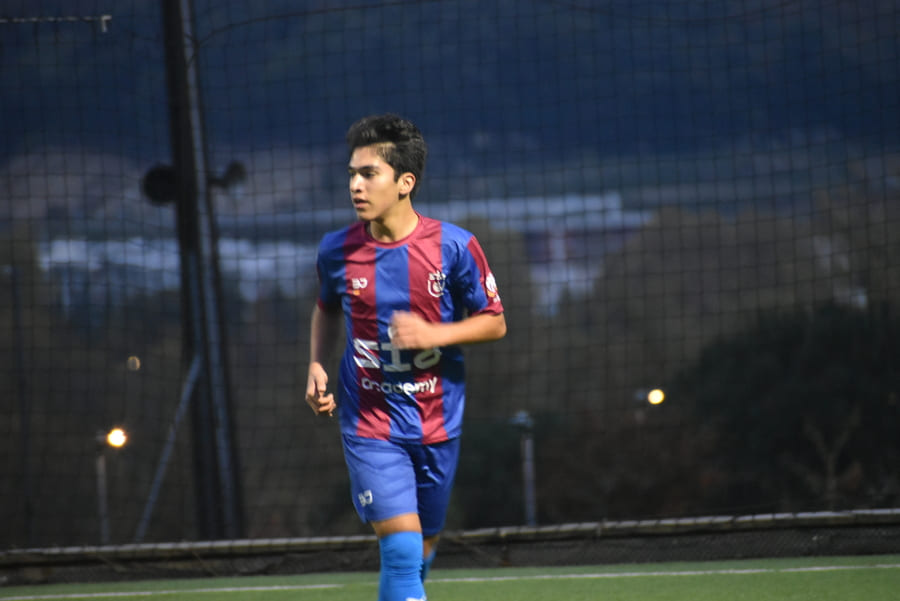

In modern youth football, intelligence has become a decisive factor, often even more important than physical condition or pure technique. At SIA Academy, where we work to enhance the overall performance of every player, we see every day how intelligence can completely elevate the way the game is interpreted. It does not appear overnight: it is built, stimulated, and trained progressively.
Below we present the seven most solid signs that indicate a footballer is developing true tactical intelligence. To contextualize it, we include two reflections from Alain, one of our coaches, who brilliantly summarizes what it means to think about football deeply.
Table of contents
1. Anticipates before the play forms
The first evidence of tactical intelligence is anticipation. A player who understands what will happen even before receiving the ball is always one step ahead of the opponent.
In our training sessions, we work on fast readings and changing scenarios to force the player to think before acting. As Alain says: “The player who anticipates does not react: he creates context.”
This ability transforms his collective influence and allows him to control the rhythm of the match.
2. Uses the body as a strategic tool
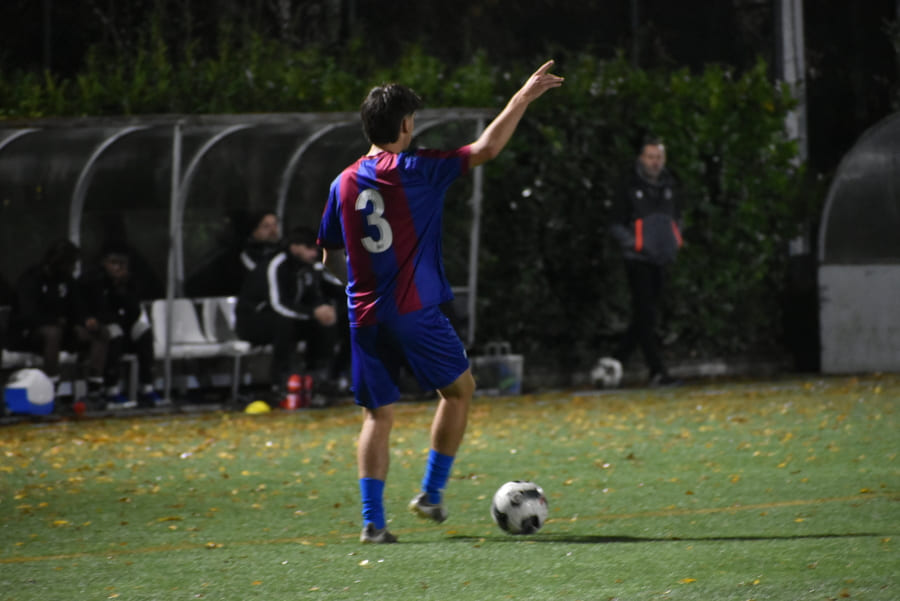
Another sign of intelligence is the way the player uses the body to generate advantages. A proper turn, an oriented control, or a simple feint can open paths that seemed blocked.
At SIA Academy, we strengthen this relationship with small-sided tasks and situations in which the body communicates intention. Alain often repeats: “The body gives you seconds; whoever knows how to use them dominates the game.”
The player who controls his body also controls his decision-making time.
3. Interprets space dynamically
Spatial intelligence marks the difference between running without purpose and positioning with precision. Space in football is relative and alive: it is won, lost, and shared.
When a player masters this reading, he appears in zones that facilitate circulation, generates passing lanes and avoids unnecessary density.
In our methodology we encourage players to understand space as an essential tactical resource, not just a place to stand.
4. Makes fast and effective decisions under pressure
A crucial sign of intelligence is the quality of decision-making. It is not enough to choose well; the player must do it quickly and with little margin.
That is why we design tasks in which pressure is not an exception, but the rule. The player learns to prioritize information, interpret intentions, and act with clarity.
Intelligence is reflected in the management of those seconds in which everything seems chaotic, but the lucid player finds the optimal option.
5. Adapts to roles, structures, and changes of rhythm
Tactical versatility is always a symptom of intelligence. A footballer who can make adjustments without losing effectiveness shows that he understands the game globally.
At SIA Academy, we promote this flexibility: we change systems, heights, responsibilities, and behaviors depending on the training phase.
The player with true intelligence does not fear change: he uses it to better read the game and contribute where he is most needed.
6. Communicates with intelligence
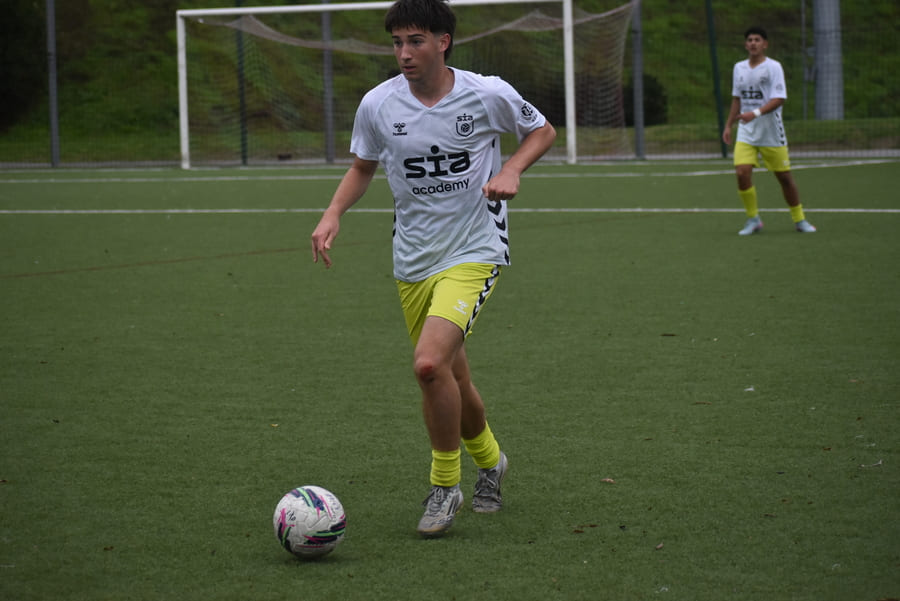
Communication is a visible extension of intelligence. It does not mean talking a lot, but conveying what is necessary to coordinate movements and synchronize decisions.
An intelligent player uses gestures, eye contact, posture, and precise words. In our teams, communication is trained just like a control or a pass, because a team that communicates thinks collectively.
It also enhances leadership and strengthens internal cohesion.
7. Maintains a constant learning mindset
The final sign of tactical intelligence lies in attitude. An intelligent player asks questions, analyzes, corrects, observes, and seeks to understand why something works or fails.
We value this greatly because we know that progress is born from that active curiosity.
Intelligence is not a final state but a process of continuous improvement, and those who stand out are the ones who make reflection a daily habit.
How we enhance these signs at SIA Academy
In our daily work we apply a methodology that combines realism, decision-making, and variability. We want the player’s tactical intelligence to develop in natural contexts, not artificial ones.
We create tasks that require thinking, adapting, and anticipating; we design situations that force space interpretation; and we reinforce the importance of communicating and choosing with clarity.
Ultimately, when a player anticipates, orients, interprets, communicates, and decides with precision, he not only improves his performance: he changes the way the team plays. At SIA Academy, we continue working so that each footballer transforms that intelligence into a real competitive tool.