




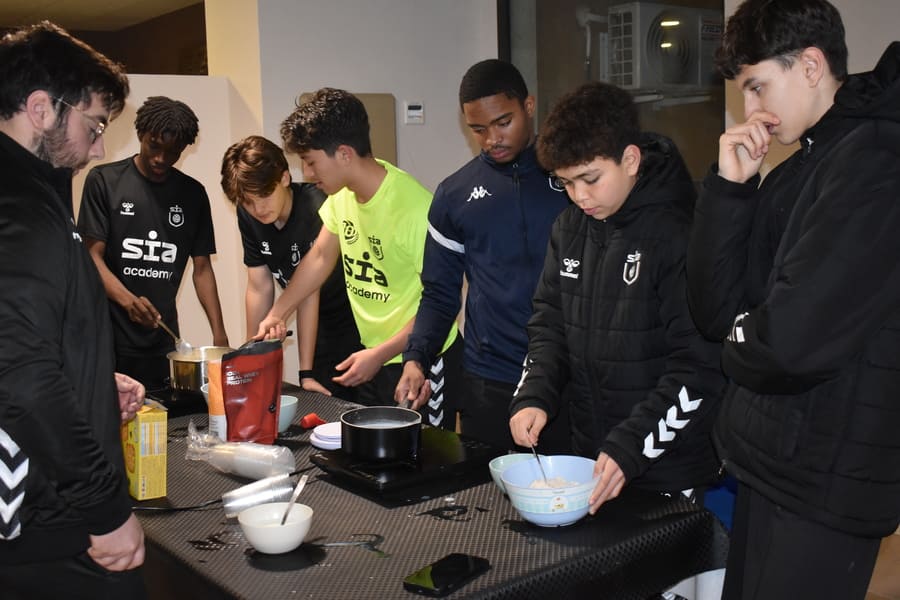

Modern football demands an increasingly high physical, technical, and mental level. It is not enough to train well; it is essential to complement that work with an appropriate nutrition strategy. At SIA Academy, we understand that diet is part of invisible training, the kind that is not seen but makes the difference in performance. A player who takes care of their diet has more energy, recovers better, and maintains a more consistent level throughout the season.
Table of contents
Balance in every meal
One of the fundamental pillars is maintaining a proper balance of macronutrients. Nutrition in football should include carbohydrates as the main source of energy, proteins for muscle regeneration, and healthy fats for proper body function. It is not about eating large quantities, but about knowing how to distribute food correctly in each meal.
At SIA Academy, we work with our players so they understand how to structure their plate intelligently. This approach helps maintain stable energy levels and avoid drops in performance during training sessions or matches.
“Balance in daily eating is what truly sustains performance over time,” explains Cristóbal, the academy’s nutritionist.

Constant hydration
Hydration is an inseparable aspect of sports nutrition. Although it is often underestimated, it directly influences physical and cognitive performance. Losing even a small percentage of body water can affect endurance, concentration, and decision-making on the field.
We insist on the importance of drinking water consistently, not only during training but throughout the entire day. In hot conditions, such as those commonly experienced in Valencia, this habit becomes even more crucial.
Proper nutrition also includes replenishing electrolytes when effort is intense, helping to prevent cramps and improve recovery.
Meal timing
Another key aspect is the timing of food intake. Nutrition does not only depend on what is eaten, but also on when it is consumed. Planning meals according to training schedules allows players to optimize available energy and improve performance.
Before training, we recommend foods rich in easily digestible carbohydrates. Afterward, it is essential to include proteins to support muscle recovery. At SIA Academy, we help our players organize their eating routines based on their training schedules.
This control over timing ensures the body is always ready to perform at its best.
Nutrition quality
Not all foods provide the same benefits. Quality is a determining factor in any athlete’s nutrition. Prioritizing fresh and natural products over ultra-processed foods has a direct impact on both health and performance.
Fruits, vegetables, legumes, whole grains, and high-quality proteins should form the basis of a player’s diet. On the other hand, frequent consumption of processed products can lead to fatigue, inflammation, and poorer performance.
“The quality of what we eat influences both performance and injury prevention,” says Cristóbal.
In our methodology, we encourage players to understand the reasoning behind every food choice, integrating nutrition as part of their overall development.

Post-training recovery
The period after training is crucial. Nutrition during this phase helps replenish energy stores and repair muscle tissue damaged during exercise. A good recovery strategy can make the difference between improvement and stagnation.
We recommend consuming a combination of proteins and carbohydrates within the first hour after exercise. This accelerates recovery and reduces the risk of accumulated fatigue.
At SIA Academy, we place special emphasis on this habit, as many young players are not aware of its importance. Proper nutrition at this stage enhances adaptation to training.
Long-term consistency
Finally, the key to everything is consistency. Nutrition is not something occasional, but a habit that must be maintained daily. Real results come when a proper diet is sustained over time.
We work to instill a professional mindset in our players. Understanding that every meal counts is essential to reaching peak performance.
Consistent nutrition not only improves performance but also overall health, allowing players to train more and better throughout the season.
At SIA Academy, we see every day how these habits transform players. Proper nutrition helps improve endurance, strength, and recovery capacity. It is a key tool for competing at the highest level and making a difference on the field.
Moreover, these principles are not exclusive to professional footballers. Any player can benefit from good nutrition, regardless of age or level. The goal is to build a solid foundation that allows the body to adapt to the demands of modern football.
Ultimately, nutrition is a determining factor in sports performance. At SIA Academy, we are committed to comprehensive development where every detail matters. Adopting these six habits is the first step toward becoming a more complete, better prepared, and more competitive player.