




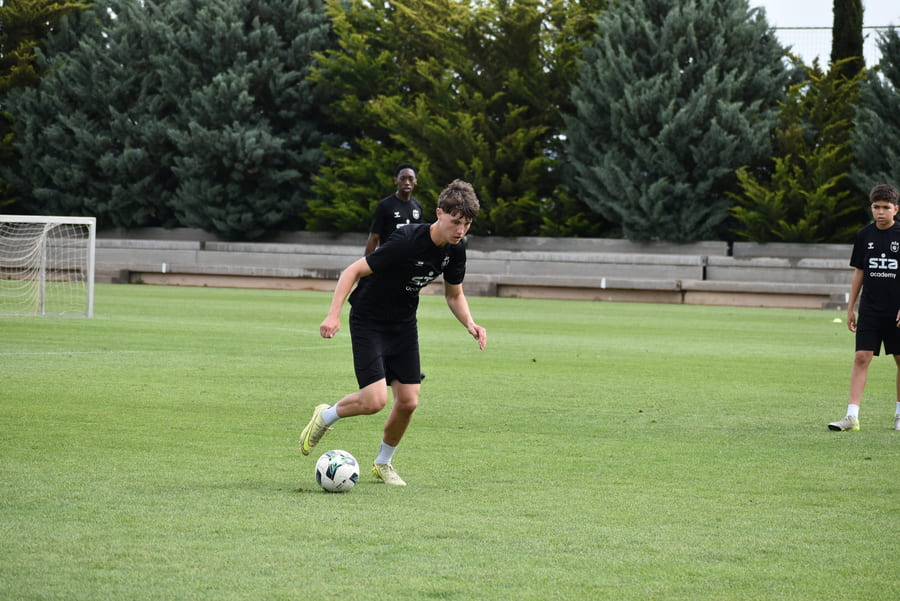

In modern football, reaching the opponent’s penalty area is not enough; what truly matters is doing so with clarity, intention and finishing ability. Efficacy in the final third makes the difference between teams that dominate without reward and those that turn their chances into goals. That is why developing offensive efficacy has become a priority for players and coaches.
At SIA Academy we work every day with the aim of enhancing that differential performance, helping our players transform arrivals into decisive actions and thus increasing their efficacy in competition.
Table of contents
Decision-making in the final third
One of the most influential factors in offensive effectiveness is decision-making. It is not enough to reach the penalty area; you must know when to pass, when to carry and when to shoot. Many promising attacks are lost due to poor decisions at key moments.
At SIA Academy we train real-game situations where the player must interpret the game quickly. Mental speed is just as important as physical speed, as it allows players to improve efficacy under high-pressure contexts.
As José Luis explains: “The difference between a good player and a decisive one lies in how they solve plays in the final third”. This ability is directly linked to effectiveness.
Technical precision in tight spaces
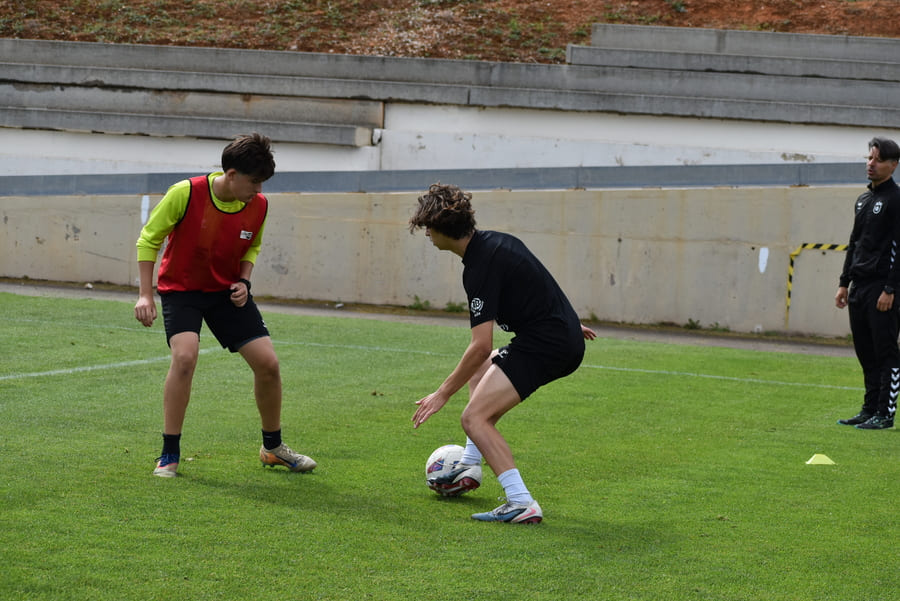
The opponent’s penalty area demands maximum precision. Spaces are limited and the margin for error is minimal. Here, individual technique makes the difference in the effectiveness of each attacking action.
Oriented controls, quick passes and accurate finishes are skills that must be constantly trained. In our methodology, we recreate high-demand scenarios so that the player improves their efficacy even under pressure.
In addition, we insist on mastering both feet, which expands the player’s options and increases their efficacy in different game situations.
Efficacy in offensive positioning
Off-the-ball positioning is key to generating real chances. It is not just about supporting the play, but about occupying the right spaces at the right time. This significantly increases collective efficacy.
At SIA Academy we work on coordinated movements so that players understand when and where to appear. Timing in runs is essential to improve efficacy in the opponent’s penalty area.
“A good off-the-ball movement can be more decisive than a great dribble”, says José Luis, highlighting the importance of collective play in offensive effectiveness.
Emotional management in key moments
The psychological component directly influences performance. Anxiety or rushing can reduce efficacy in clear goal-scoring situations. Staying calm allows for better execution.
Training under controlled pressure conditions helps players adapt to real competition. In our sessions, we simulate demanding scenarios to reinforce confidence and improve efficacy in decisive moments.
Finishing as a training habit
Efficacy does not appear by chance; it is built through repetition. Finishing must be a constant in daily training to consolidate automatisms.
At SIA Academy we design specific tasks where players finish in different situations. The more variety in finishing that is trained, the greater the effectiveness in competition.
We also use video analysis to detect patterns and correct mistakes, allowing players to continue improving their efficacy consistently.
Speed of execution
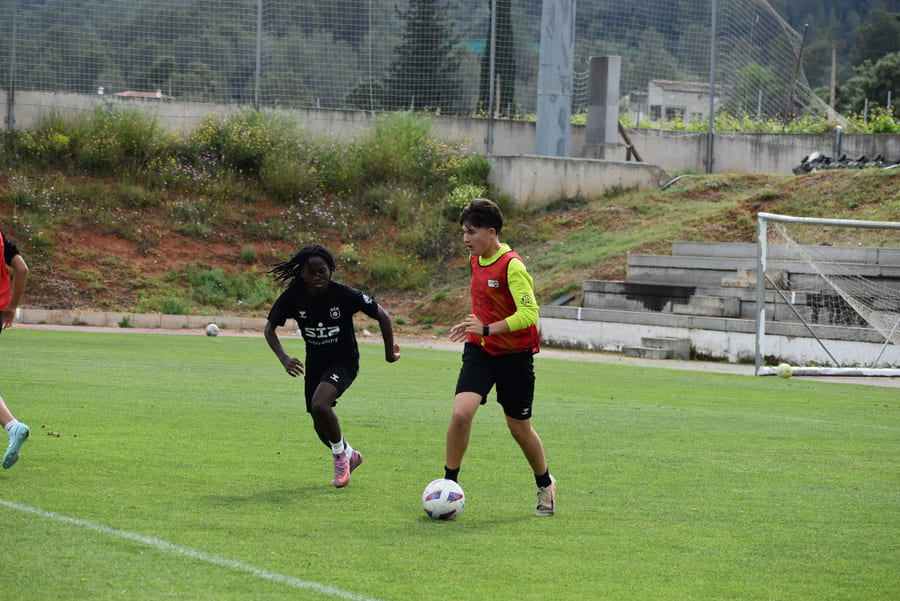
Modern football demands speed in every action. Reducing the time between reception and decision significantly increases efficacy, as it makes defensive intervention more difficult.
Thinking and executing faster is a skill that can be trained. That is why we propose exercises with limitations that force players to act immediately, improving their effectiveness in real situations.
Collective coordination in attack
Offensive performance does not depend only on individuals. Coordination between players is essential to create advantages and increase team efficacy.
At SIA Academy we promote a combinative style of play where everyone participates. Quick combinations and synchronized movements are key to enhancing efficacy in the opponent’s penalty area.
When the team understands the game collectively, opportunities multiply.
Improving effectiveness when reaching the opponent’s penalty area involves working on multiple aspects of the game: from technique to mentality, including tactics and teamwork. It is a continuous process that requires dedication and methodology.
At SIA Academy we continue to commit to comprehensive training that allows our players to be decisive. Because in modern football, efficacy is not just an advantage: it is a necessity to compete at the highest level.