






Emotional nutrition has become a key concept for understanding sustained sports performance. This approach highlights a direct relationship between emotions and eating habits, showing up both as emotional eating—eating to manage negative emotions—and as an integral model of well-being where physical health and emotional stability reinforce each other. In both youth and professional football, this connection is evident: the way a player manages what they feel influences how they eat, and the way they eat conditions their stability on the pitch.
At SIA Academy, where we work from a global perspective of the player, we integrate this approach because we consider it essential for developing consistent and balanced footballers.
Índice
The relationship between emotion and eating in the football context
A footballer is constantly exposed to multiple sources of tension: internal competition, expectations from the environment, self-criticism, performance pressure, and the ongoing pursuit of improvement. These emotions, if not properly managed, can trigger emotional eating behaviours, such as overeating after a bad match or restricting food due to anxiety before an important training session.
Cristóbal, nutritionist within our structure, explains it clearly:
“Many players think they eat poorly because they lack discipline, but in reality they eat guided by emotions they haven’t learned to identify. When we understand that link, everything starts to fall into place.”
This relationship directly affects the footballer’s consistency. A player who fluctuates between days of proper nutrition and days ruled by unmanaged emotions often experiences variations in energy, focus, and physical condition.
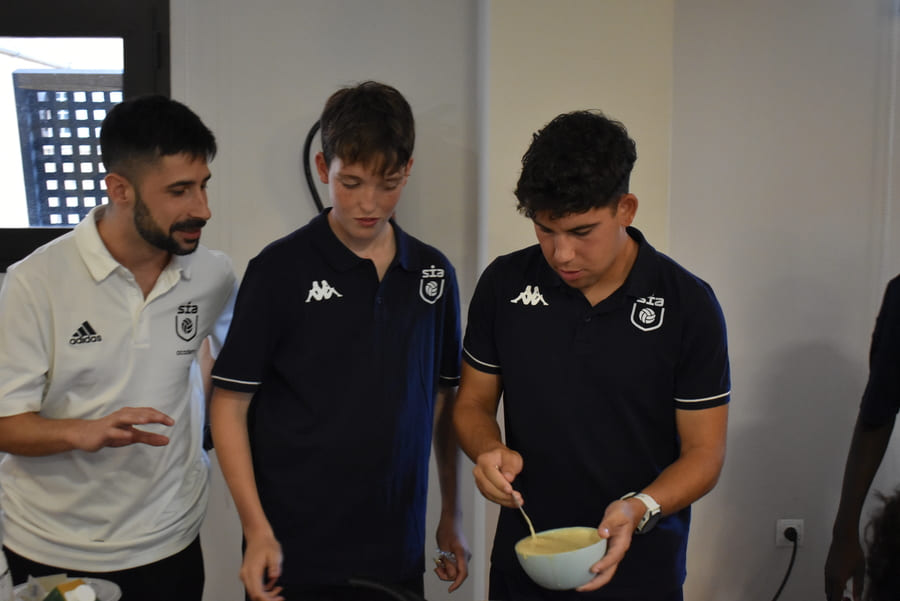
How emotional nutrition sustains a player’s consistency
Consistency—such a difficult value to achieve—is deeply tied to the balance between what a player feels and what they consume. When emotions influence eating, the body responds with changes in:
- Energy levels,
- Sleep quality,
- Muscle recovery,
- Mental clarity during decision-making,
- The body’s inflammatory response,
- Body weight and composition,
- Self-perception and body relationship.
When these factors become unstable, performance fluctuates as well. Conversely, when a player learns to manage emotions and eat coherently, stability emerges, translating into greater consistency.
This is why emotional nutrition is not an accessory concept: it is a direct bridge between emotional health, eating habits, and sustained performance.
Cristóbal summarises it this way:
“The body is never neutral: you either eat to balance your emotions, or your emotions will decide for you what you eat and how you perform.”
Emotional eating: a frequent challenge in youth football
Emotional eating is not an isolated issue; in youth development it is extremely common. Young players may overeat after losing, restrict food for fear of “feeling heavy,” turn to sugar to relieve stress, or change their diet dramatically depending on how their week went.
At SIA Academy, we see every day how these patterns affect a player’s development. That’s why we treat emotional nutrition as an essential part of the formative process, just like physical training or tactical preparation.
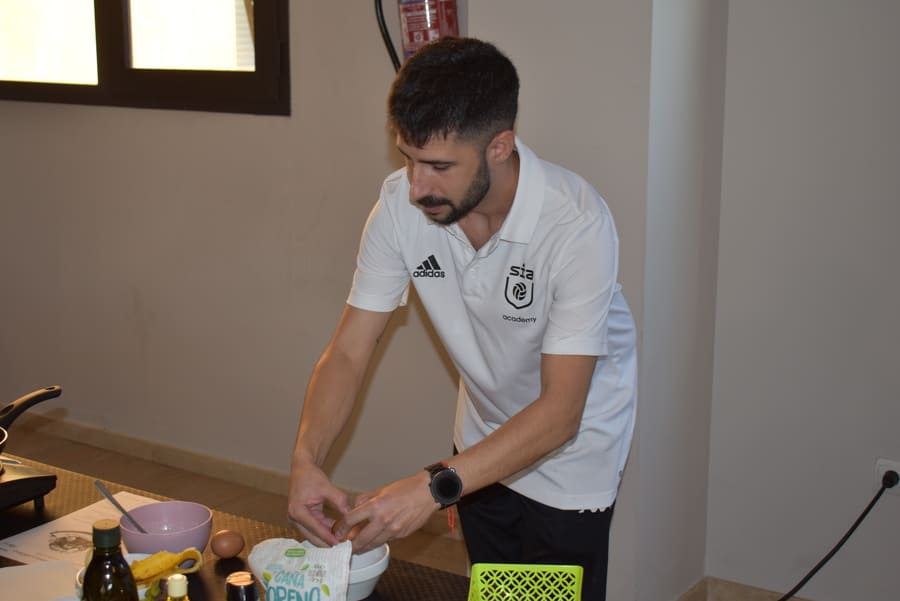
How we work on emotional nutrition at SIA Academy
At SIA Academy, we use an integrated approach that combines emotional management and nutritional education. Our aim is for the player to understand what they feel, how that affects their eating habits, and how nutrition influences their stability on the pitch. To achieve this:
- We conduct personalised sessions where we analyse emotions linked to food: stress, guilt, frustration, or seeking comfort.
- We educate players on stable habits, teaching them to maintain a nutritional routine even during emotionally difficult weeks.
- We integrate emotional-awareness techniques, helping players distinguish real hunger from emotional hunger.
- We offer healthy alternatives, both nutritionally and emotionally, to prevent using food as a regulator.
- We support the player through critical moments, such as injuries, losing a starting spot, or high competitive loads.
This work enables footballers to develop emotional and nutritional autonomy, drastically reducing fluctuations in performance.
A consistent footballer is born from the balance between what they feel and what they eat
Consistency is not a trait that appears by chance; it is the consequence of a stable mind and a well-nourished body. A player who understands emotional nutrition and applies it daily can maintain constant levels of energy, motivation, and clarity, regardless of competitive circumstances.
At SIA Academy, we see it continuously: when we help a player understand how emotions influence their nutrition, their performance becomes more solid, more stable, and more reliable. Because a consistent footballer is not just one who trains well, but one who understands himself and learns to take care of himself from within.
Emotional nutrition is, in essence, the first tool to build that consistency. And we work every day to ensure our players adopt it as part of their sporting identity.