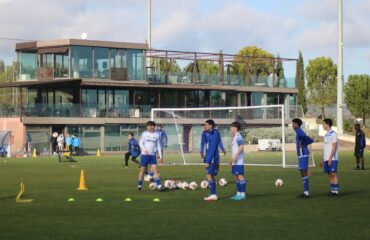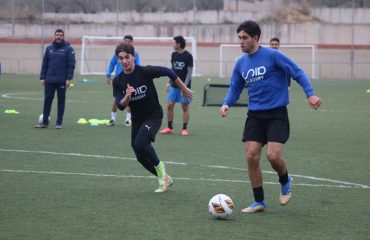


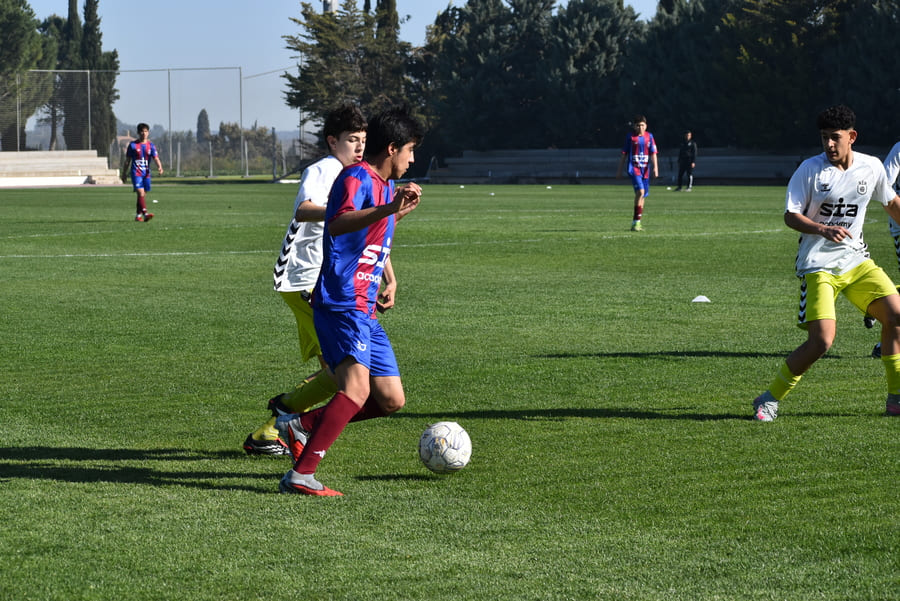

In modern football, specialization is still important, but versatility has become one of the most decisive qualities for progression. A player who learns to train in different positions not only expands their resources but also develops a much deeper understanding of the game. At SIA Academy, we believe in this idea as an essential part of our training methodology, as we believe that training outside the usual role accelerates a player’s development.
The ability to adapt tactically makes the difference between an average player and a truly complete one. In today’s game, those who do not adapt fall behind.
Table of contents
An open mindset when training
One of the first benefits of training in different positions is the development of a more flexible mindset. The player stops seeing the pitch from a single perspective and begins to understand how all lines of the team behave. This improves anticipation and reading of the game in real match situations.
Moreover, when a footballer must train in a role different from their usual one, they face challenges that force them out of their comfort zone. That process creates discomfort at first, but that is exactly where the greatest growth happens.
Training outside your natural role is not losing identity, it is expanding it
“When a player dares to train outside their natural position, they begin to understand football in a much more complete way,” explains Alain, academy coach.
At SIA Academy, we constantly encourage this exposure to different roles so that players do not limit themselves to a single way of interpreting the game. Training in various positions allows their evolution and competitive intelligence to accelerate.
Tactical intelligence and global understanding of the game
Another major benefit of training in different positions is the increase in tactical intelligence. The player learns what each role requires, how space behaves from different angles, and what decisions are most efficient in each context. This cross-knowledge improves overall performance on the pitch.
A player who has experienced multiple positions better understands the timing of the game and makes faster decisions under pressure. That is why we insist on varied training within the development process.
Football is understood better when experienced from every role
In this sense, the training process becomes richer, as it is not just about executing actions but understanding the “why” behind every movement.
“Tactical intelligence is built when the player experiences the game from different perspectives,” says Alain.
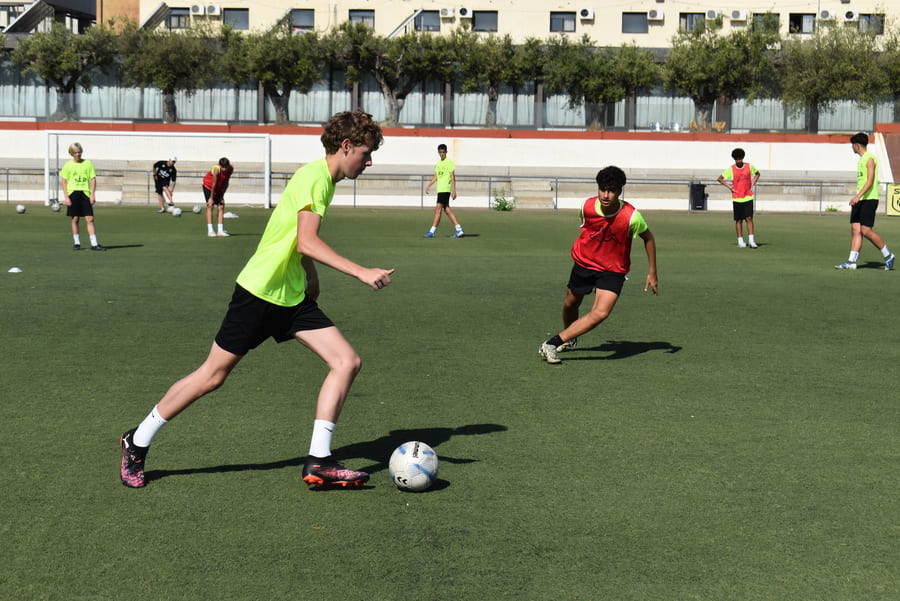
At SIA Academy, we design specific tasks so that players can train in varied scenarios that simulate real competitive situations.
Adaptability as a competitive advantage
In modern football, adaptability is an essential quality. Match circumstances can require position changes at any moment, and a player prepared for this brings enormous value to the team. That is why training in different roles is not just a developmental tool, but a real competitive advantage.
In addition, this process improves the player’s mental resilience. Learning to train in new positions reduces fear of change and increases confidence in uncertain situations.
A versatile player always has more opportunities in the modern game.
At SIA Academy, we believe this type of training prepares footballers for high-demand contexts where versatility is key. We also observe that training in different roles strengthens their decision-making.
Developing complete players means teaching them to think, not just to execute
We also observe that players who go through different positions improve their collective understanding of the game. This translates into better team performance and greater cooperation between lines. Training this way improves their football intelligence.
“A complete player is not the one who masters a single position, but the one who understands the game in its entirety,” states Alain.
At SIA Academy, we apply this philosophy in every session, ensuring that players experience the game from multiple perspectives. Training with this mindset completely changes their development.
Long-term impact on development
In the long term, training in different positions has very positive effects on a player’s career. Versatility becomes a key tool to increase sporting opportunities and competitiveness in any team.
Versatile players tend to adapt better to tactical changes, injuries, or coach requirements. This allows them to remain consistently involved in the team dynamic, even when circumstances change. Training in this context improves competitive maturity.
Versatility is not a bonus, it is a real professional advantage
In addition, this experience in different roles improves decision-making under pressure, resulting in more stable and mature performance.
In conclusion, training outside the natural position is not an experiment but an intelligent development strategy. At SIA Academy, we continue to support this model because we believe it produces more complete, intelligent players who are better prepared for modern football.