


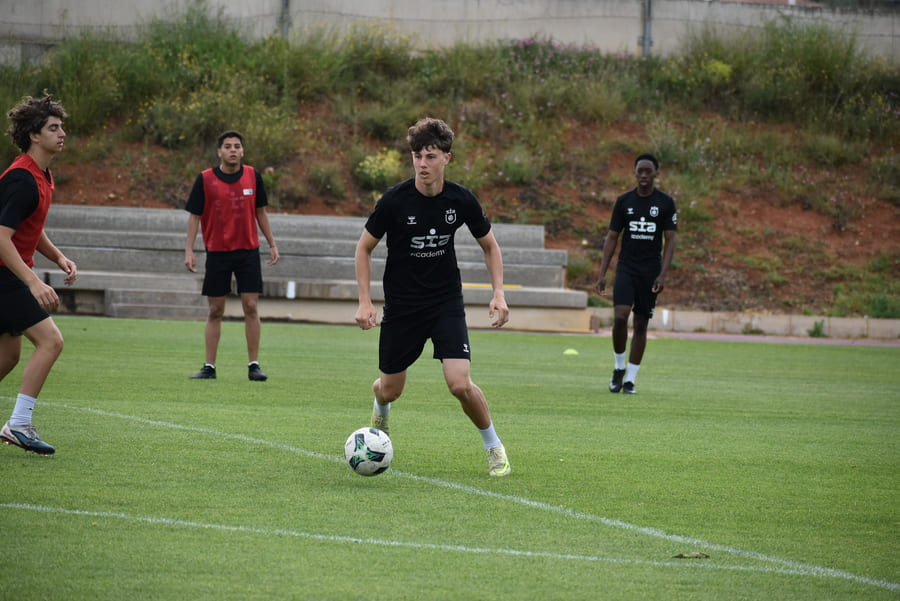

In modern football, matches are not always won through constant dominance, but through the ability to interpret and solve key moments. There are very specific situations that can tilt the balance in favor of one team, regardless of the overall level of play.
Knowing how to identify these situations and train them specifically makes the difference between competing and winning, especially in youth development stages. At SIA Academy we work with this approach in an integrated way, helping players recognize when and how to act.
“Football is decided by details. The team that best dominates key situations has more chances to win”, explains Alain, the academy coach.
Table of contents
Offensive transitions
Offensive transitions appear right after winning the ball back. These are moments when the opponent is disorganized and space is greater.
Taking advantage requires speed of thought and precision in execution, since the margin for error is minimal. A well-timed pass or a wrong decision can completely change the outcome of the play.
In our daily work, we place great importance on these actions, because they reflect real football: dynamic, changing and demanding.
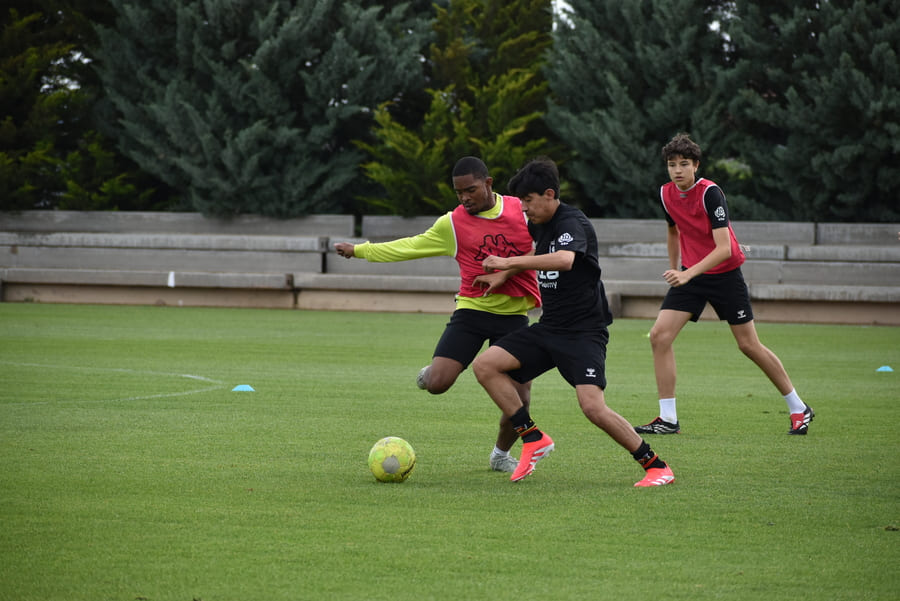
Defensive transitions
Just as important as attacking are the situations where the team loses possession. The immediate reaction after losing the ball is key to avoiding chances from the opponent.
Good organization in these situations allows quick recovery or, at least, slows down the opponent’s attack, reducing risk. Players must understand positioning and act in coordination.
At SIA Academy we train these moments with specific exercises that force players to think quickly and make decisions under pressure.
Set-piece actions
Corners, free kicks and penalties are decisive actions in many matches. Although sometimes underestimated, they can determine the result in closely contested games.
Mastering set-piece actions requires both tactical preparation and maximum concentration, since any lapse can result in a goal. They also provide a great opportunity for well-trained teams.
“Set-piece situations are trainable and clearly make a difference when executed properly”, says Alain.
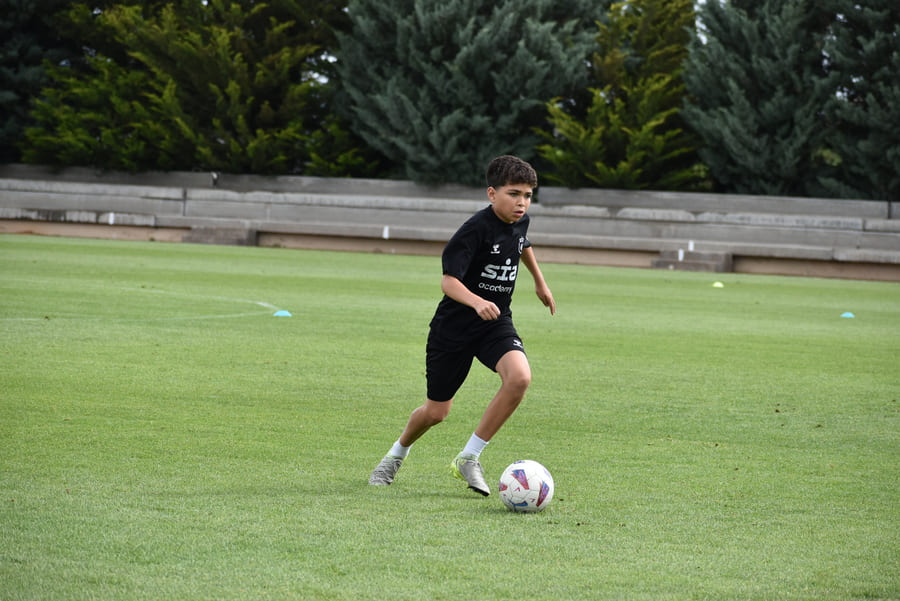
One-on-one situations
One-on-one situations, both in attack and defense, are moments of maximum individual demand. Here talent, technique and confidence play a fundamental role.
Winning these situations can break defensive lines, create superiority or prevent clear chances for the opponent. That is why they must be trained from an early age.
In our approach, these actions are not trained in isolation but within game context, so players understand when to use them.
Managing the final minutes
The final minutes of a match generate high-pressure moments. Fatigue, pressure and the score directly influence decision-making.
Knowing how to perform requires maturity, concentration and emotional control, something that is developed through training and experience. Not all players are prepared to handle these moments.
At SIA Academy we help players face it with confidence by simulating real match scenarios in training.
Decision-making in the attacking third
Many decisive plays occur near the opponent’s box. Choosing whether to pass, shoot or dribble at the right moment is essential.
The quality of decision-making in these situations often determines whether an opportunity becomes a goal, making game intelligence a key factor. It is not just about technique, but understanding.
“An intelligent player recognizes situations before others. That advantage is decisive”, highlights Alain.
The importance of training these game moments
It is not enough to know these situations; they must be trained specifically. Repeating real-game scenarios allows players to anticipate and react better during competition.
At SIA Academy we design sessions where these actions constantly appear within dynamic exercises. Our goal is for the player not only to execute, but to understand the game.
In addition, the environment directly influences learning. Training in a demanding context, surrounded by other players and with constant feedback, accelerates improvement in these types of situations.
Football is decided in specific moments, not just through overall play. The situations that appear during a match are opportunities that must be taken.
Working on these situations from a formative stage helps develop more complete, prepared and competitive players. At SIA Academy we understand the game from this perspective, helping each footballer grow in every detail.
Because in the end, it is not the team that has the most possession that wins, but the one that best solves the situations that really matter.