




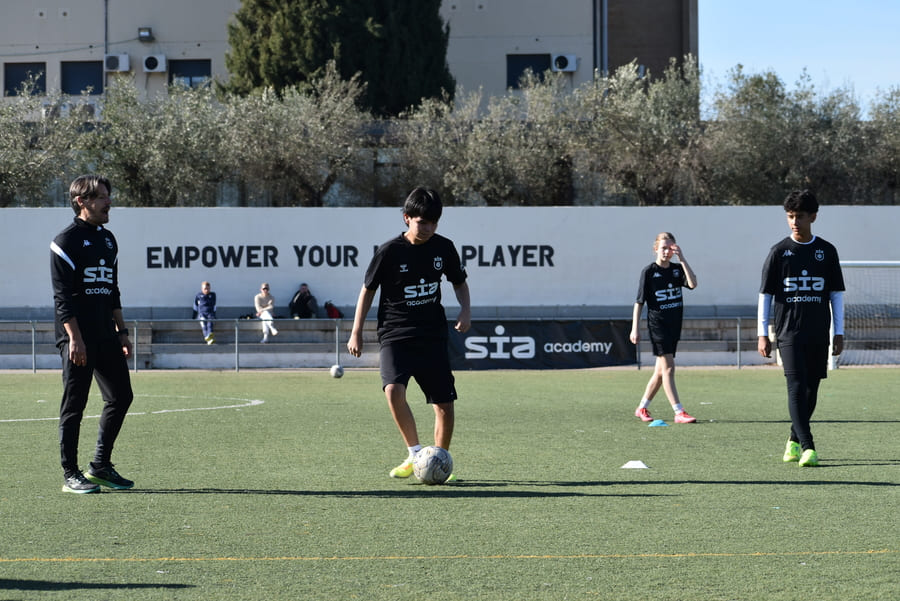

In modern football, talent alone is no longer enough. The difference between a player who progresses and one who stagnates often lies in their ability to define clear objectives. Setting realistic and measurable goals is a key tool to guide effort, maintain motivation, and objectively assess progress. Without this foundation, training loses direction and results become inconsistent.
From our experience at SIA Academy, we understand that every footballer has a unique path. That is why we work with a structured approach that allows general aspirations to be turned into concrete goals. It is not just about wanting to improve, but about knowing exactly in what, how, and within what timeframe to do so.
Table of contents
The importance of defining clear objectives
One of the most common mistakes among young footballers is setting overly general objectives, such as “becoming a better player” or “making it to professional level.” Although these ideas can serve as initial motivation, they are not enough to guide daily work. Goals must be specific, measurable, and achievable in order to have a real impact on performance.
For example, instead of aiming to “improve passing,” a player should set objectives such as increasing long-pass accuracy or reducing ball losses in certain areas of the pitch. This type of approach allows progress to be evaluated concretely.
At SIA Academy, we encourage this mindset from day one. We help players transform abstract objectives into defined goals that they can work on session after session, creating a much more effective process.
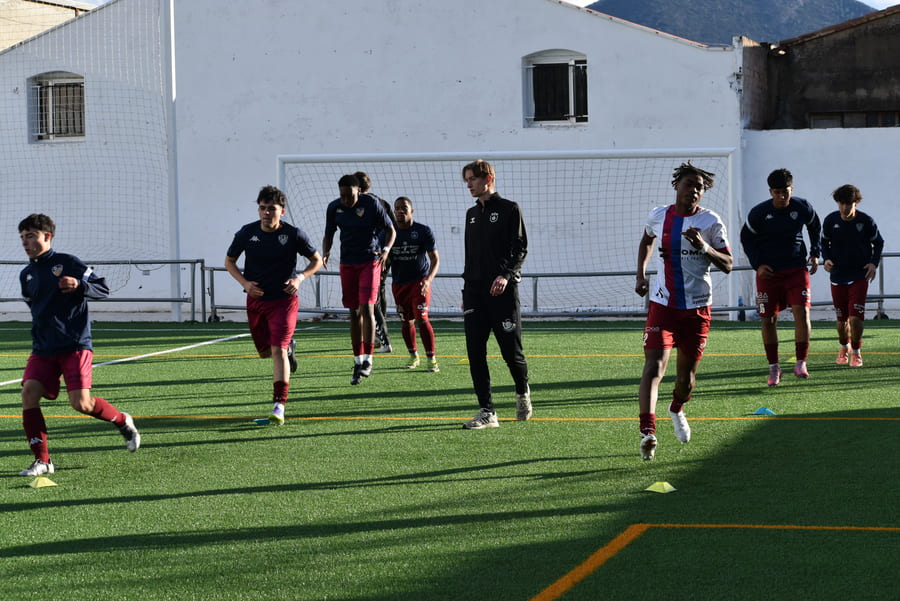
Planning in the short, medium, and long term
Not all objectives have the same time horizon. For development to be balanced, it is essential to divide them into different levels. Short-term goals allow quick results to be seen, while long-term goals set the overall direction.
Short-term goals usually focus on specific technical or physical aspects, such as improving reaction speed or ball control accuracy. These build confidence and reinforce motivation.
On the other hand, medium-term objectives involve a more complete evolution of the player, integrating several aspects of the game. Finally, long-term goals are related to bigger ambitions, such as competing in higher-level leagues.
“When a player understands how to divide their goals, they start to see progress as a continuous process rather than an immediate result,” explains Alain, coach at the academy. This perspective is essential to avoid frustration.
Measuring and tracking progress
Setting objectives without measuring them is one of the biggest mistakes in sports development. What is not measured cannot be improved efficiently. That is why it is essential to have tools that allow performance to be evaluated objectively.
In our daily work at SIA Academy, we use different indicators to analyze player development. Physical, technical, and tactical data allow us to adjust goals based on real progress, avoiding both over-demand and lack of challenge.
Constant monitoring also helps maintain motivation. When a player sees concrete results, their commitment to the process increases. It also allows deviations to be corrected before they become major problems.
Realism and balance in goals
One of the biggest risks when setting goals is unrealistic expectations. Overly ambitious objectives can create frustration, while overly easy ones do not encourage growth. Finding the right balance is key to maintaining consistent progression.
In this sense, professional guidance makes a difference. At SIA Academy, we work to ensure that each player has goals adapted to their level, age, and competitive context. This personalized approach allows progress to be sustainable and effective in the long term.
“Goals must be a challenge, but also a real opportunity for improvement. If there is no balance, the player loses focus,” says Alain. This philosophy is applied at every stage of the development process.
Constant adaptation and evolution
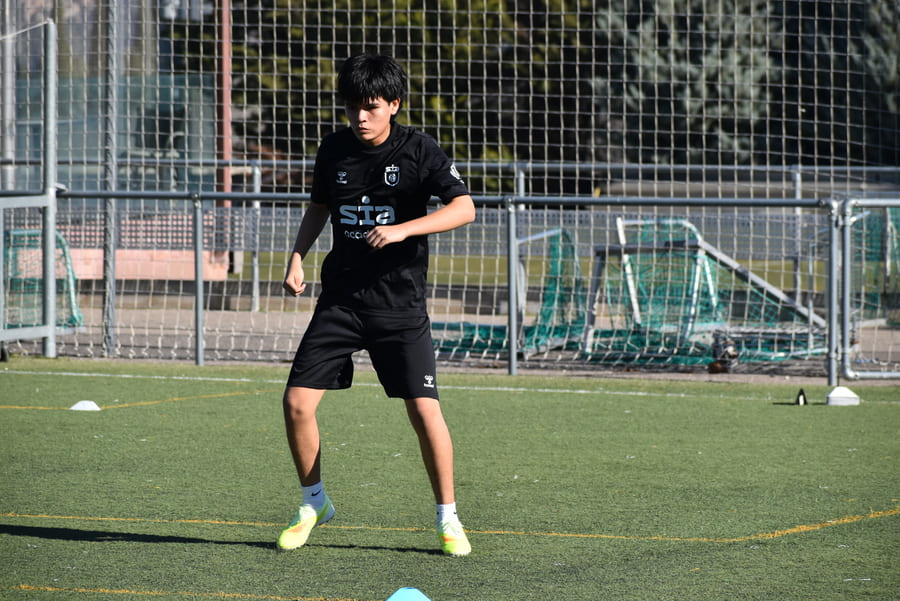
Football is a dynamic sport, and a player’s development does not always follow a straight line. That is why goals must be flexible and adapted to circumstances. Injuries, position changes, or new competitive demands may require adjustments.
Regularly reviewing and updating goals is essential to keep them relevant, ensuring they remain aligned with the player’s evolution. This process prevents stagnation and allows continued progress even in difficult moments.
In our environment, we promote an open mindset toward change. We understand that growth is not linear, and that adapting objectives is part of the learning process.
The environment as a key factor
The context in which a player trains directly influences their ability to achieve objectives. A professional environment with clear methodology and constant monitoring greatly facilitates the process.
At SIA Academy, we create an ecosystem where goals are part of daily life. Every training session, every practice, and every evaluation is oriented toward achieving specific objectives, creating a culture of continuous improvement.
In addition, group work also enhances individual development. Sharing goals with other players creates a competitive and motivating environment, where everyone pushes each other to improve.
Turning the process into results
The true value of goals is not in defining them, but in achieving them. This requires commitment, discipline, and consistency. Talent opens doors, but well-worked goals are what allow sustained progress.
At SIA Academy, we support players throughout this entire process, helping them structure their development and turn objectives into real achievements. Because in football, as in any discipline, success is not a coincidence, but the result of a well-executed plan.