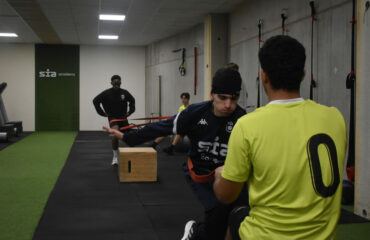




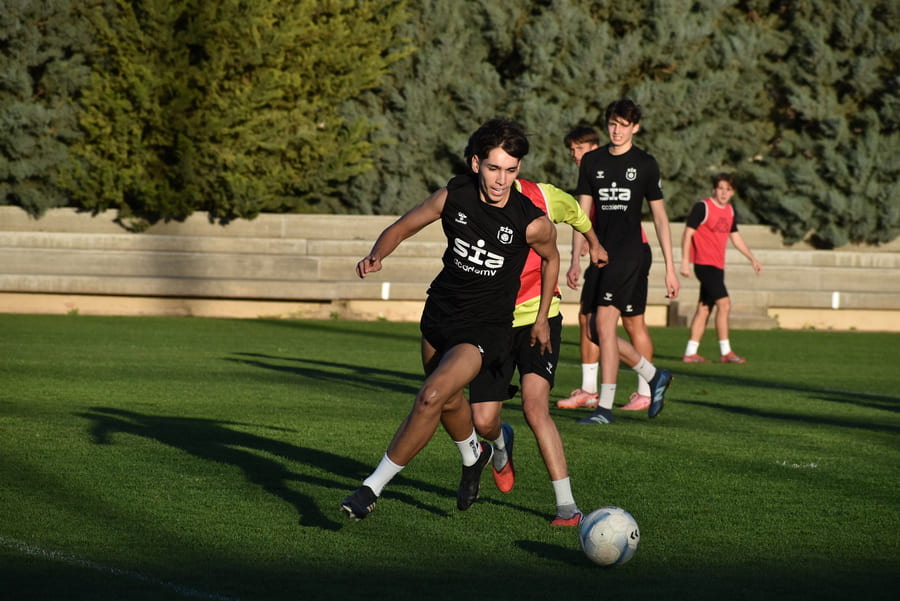

In modern football, physical performance makes an increasingly clear difference. Training hard is not enough: it is necessary to know whether real progress is being made. Measuring parameters such as speed and endurance allows players to evaluate their work and adjust training efficiently. Monitoring these indicators turns daily effort into useful data that helps make better sporting decisions.
Many players train without having a clear reference of their development. However, there are practical and accessible methods that make it possible to track improvement without the need for advanced technology. The key is to apply simple measurement tools that reflect real performance on the pitch.
Table of contents
The importance of measuring performance
Measuring speed and endurance is not only useful to understand current physical condition, but also to set clear objectives. A player who tracks their progress is more likely to improve consistently and sustainably.
In addition, this data helps identify weaknesses. For example, a footballer may have good endurance but low reaction speed. Identifying these aspects is essential to design more effective training sessions. Measurement transforms intuition into objective and actionable information.
At SIA Academy, we work with this approach, integrating regular assessments into the development process. We understand that player growth depends on knowing their performance at all times and acting accordingly.

Practical tests to measure speed
There are several ways to measure speed in football without the need for complex equipment. One of the most common is the short sprint over 10, 20 or 30 meters. This type of test evaluates acceleration and top speed.
To perform it correctly, you simply need to mark a distance and time it with a stopwatch or a mobile app. Repeating these tests over time makes it possible to track real improvements in a player’s speed.
Another interesting option is speed testing with changes of direction, such as agility tests. This type of exercise measures not only linear speed, but also the ability to react and move in more realistic game situations. In football, speed is not just about running fast, but doing so effectively in changing contexts.
“Speed in football cannot be understood without decision-making. Measuring it properly means including real game situations,” explains Alain, academy coach.
How to assess endurance in a simple way
Endurance is another key pillar of football performance. A player may be very fast, but if they cannot maintain that level throughout the match, their impact will be limited. Assessing endurance helps understand how long a high level of intensity can be sustained.
One of the most well-known tests is the Cooper test, which consists of covering the maximum possible distance in 12 minutes. The Yo-Yo test, widely used in professional football, can also be applied. These tests provide a clear reference of a player’s aerobic capacity.
However, there are also simpler methods. For example, performing running intervals with controlled times and observing recovery between efforts. The ability to repeat high-intensity efforts is a key indicator of good endurance in modern football.
At SIA Academy, we use different tools to measure this aspect, adapting to each player’s age and level. Our goal is to obtain useful information that allows us to improve performance in a personalized way.

Transfer to real game situations
Measuring speed and endurance in specific tests is useful, but the most important aspect is how these improvements translate into matches. The real goal is for physical development to lead to better on-field performance.
For this reason, it is advisable to complement tests with real game situations, such as small-sided games or tactical exercises. These contexts allow players to evaluate whether speed and endurance are being applied effectively in football.
“It’s not just about running more or faster, but doing it at the right moment. That’s where true improvement is seen,” says Alain.
At SIA Academy, we integrate these evaluations into our training model. We aim for every physical improvement to have a direct impact on the player’s performance in matches.
Common mistakes when measuring progress
One of the most common mistakes is a lack of consistency in measurements. Performing a test only once does not provide meaningful information. Regularity is essential to obtain reliable and useful data.
Another mistake is comparing results with other players instead of focusing on personal development. Each footballer has their own pace of improvement, and the important thing is to progress relative to oneself.
It is also common to overlook factors such as rest, nutrition or fatigue. These elements directly affect performance and can distort results if not properly controlled.
Measure to improve
Speed and endurance are fundamental qualities in modern football, but their development must be accompanied by proper evaluation. Measuring progress allows players to train more intelligently and reach a higher level of performance.
Applying simple tests, recording results and analyzing progress are key steps for any player. Improvement is not accidental, but the result of well-planned and monitored work.
At SIA Academy, we strongly believe in this process. That is why we incorporate measurement as an essential part of training. Only by understanding performance can we help each player reach their full potential on the pitch.