






Real progress as a footballer does not happen by chance, but as a consequence of conscious, structured and consistent work. Many players train hard, put in the effort and show commitment, yet still feel they are not improving at the pace they expect. At SIA Academy, from my direct experience on the pitch, I have seen that one of the clearest differences between those who evolve and those who stagnate lies in how weekly objectives are approached.
Having a clear objective is not a trend or an empty motivational technique. It is a practical tool that allows players to focus their energy, better interpret training sessions and get more out of every workout. When a footballer understands what they want to improve during a specific week, the entire learning process gains coherence.
Table of contents
Why weekly objectives are so important
A weekly objective turns training into an intentional process, where every repetition has a clear purpose. Instead of training automatically, the player begins to train with awareness, evaluating decisions and becoming conscious of their actions.
In modern football, the level is so high that improvements are usually small but cumulative. That is why dividing development into weekly objectives helps players progress step by step without generating frustration. At SIA Academy, I see how players who work with a defined objective assimilate feedback better and show greater mental involvement.
As José Luis, academy coach, explains:
“A player without an objective trains, but does not always learn; a player with an objective learns even when he makes mistakes.”
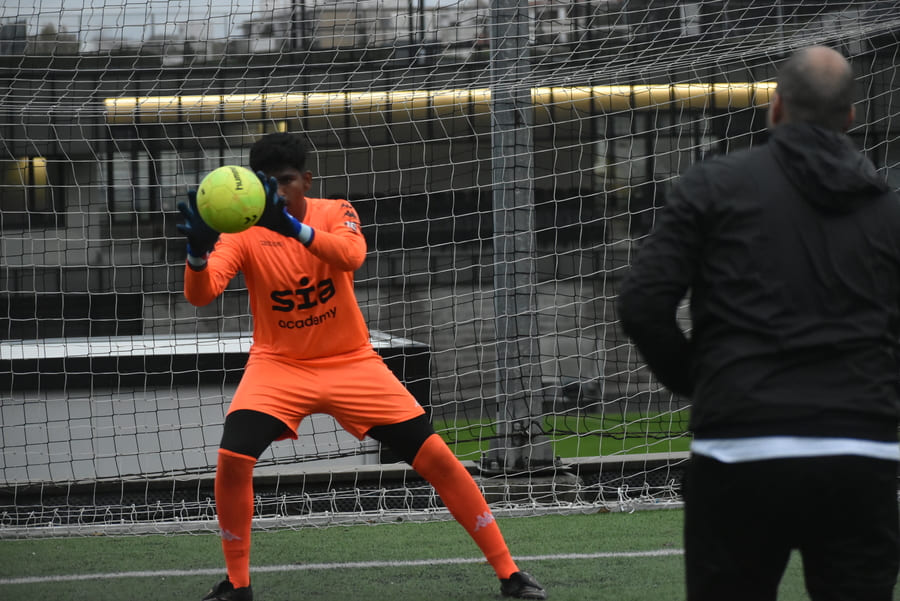
What makes an objective truly useful
Not all objectives generate improvement, and one of the most common mistakes is setting them too generally. Expressions such as “play better” or “have a good match” do not help focus daily work.
A good objective must be concrete, observable and realistic within a week of training. It can be related to technical, tactical, physical or mental aspects, but it must always connect with real game situations. At SIA Academy, I work with each player so that their objective makes sense within their position, age and stage of development.
In addition, it is crucial that the objective depends on the player themselves. It is not about external results, but about actions that are under their direct control. This approach strengthens individual responsibility and prevents motivation from depending solely on external factors.
Less is more: the importance of prioritising
One of the biggest mistakes is accumulating too many objectives in the same week. When a player tries to improve five things at once, their attention becomes scattered and learning is diluted.
At SIA Academy, I always recommend working on one or two objectives at most. This allows for deeper focus, intentional repetition and clear evaluation. Real progress is not built on haste, but on consistency.
José Luis summarises it very clearly:
“I prefer a player fully focused on one specific objective rather than one who wants to improve everything and consolidates nothing.”
How to work on objectives during the week
Defining an objective is only the first step; the real work begins day by day. The player must integrate that objective into every training session, every drill and every piece of feedback.
At SIA Academy, I help players keep their objective present through questions, technical adjustments and constant reflection. During tasks, the footballer learns to identify when they are applying their objective and when they are not, developing greater awareness of their own game.
This process turns the player into the protagonist of their development. They no longer train just to comply, but to improve with intention.
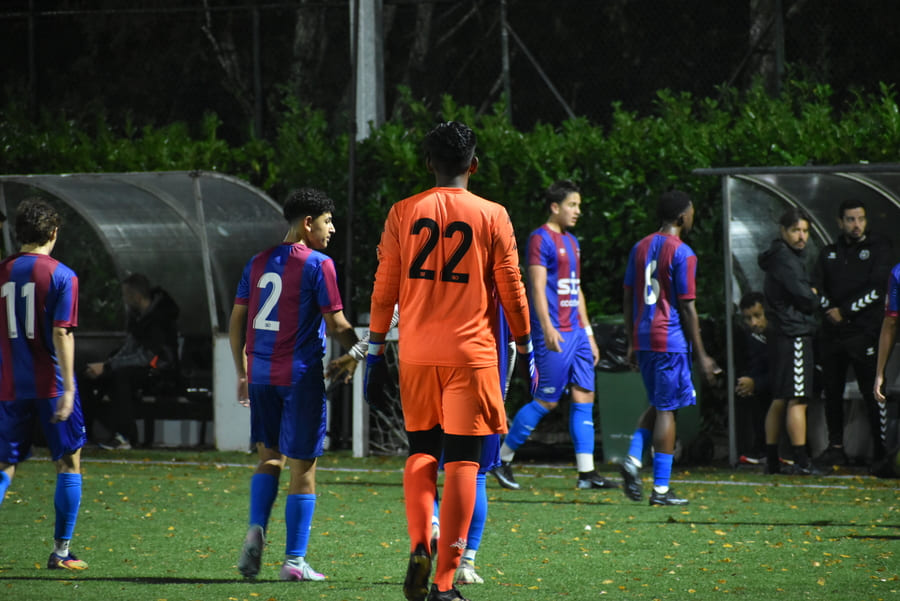
Evaluation as part of learning
Evaluating the objective at the end of the week is essential to continue growing. It is not about judging performance, but about analysing it. The player should ask themselves whether they have worked on their objective, in which situations it was more difficult and what they learned during the process.
At SIA Academy, I use this evaluation as the basis for defining the next weekly objective. Sometimes the same one is maintained to consolidate it; other times it is adjusted or changed according to the player’s needs. This continuous cycle is what turns objectives into a living and effective tool.
Objectives and growth mindset
Working with weekly objectives does not only improve sporting performance, it also develops key mental skills. The player learns to organise themselves, take responsibility and value the process over immediate results.
Over time, this way of working strengthens discipline, concentration and self-criticism. At SIA Academy, I firmly believe that this mindset is essential to face the demands of modern football, where constant adaptation makes the difference.
The player who learns to set an objective, work towards achieving it and evaluate it honestly acquires a skill that will accompany them throughout their entire career.
Common mistakes when working with objectives
One of the most frequent mistakes is abandoning an objective after a difficult week. Improvement is not always linear, and it is normal to have weeks where progress is less visible. In those cases, consistency is key.
Another mistake is defining objectives based solely on results, which can generate frustration. At SIA Academy, I insist that the focus must be on the process, not just the final outcome.
Improving with purpose and direction
Setting weekly objectives is one of the most powerful tools for individual player development. When they are defined with criteria, worked on consistently and evaluated honestly, progress stops depending on chance.
At SIA Academy, I am committed to a training model where each player understands their path and works on each objective with intention. Because improving is not about training more hours, but about training with focus, awareness and commitment.