





In high-level football, where every decision can change the outcome, self-control has become an essential piece for a player’s real performance. At SIA Academy we see it every day: technique, tactics and physical condition build the footballer, but it is emotional mastery that determines whether that player will be able to perform when the match reaches its most demanding phase. And self-control not only influences what a player does, but how he does it under pressure.
Table of contents
The role of self-discipline in competitive performance
When a footballer faces tense environments, controversial refereeing decisions or situations of maximum demand, emotions skyrocket. At that moment, self-control becomes the tool that allows him to stop the impulse, analyse the situation and act with clarity. Our psychologist José Luis sums it up perfectly: “The player who controls his emotions doesn’t need the match to be in his favour to perform; he can perform even when it’s against him.”
In our experience, self-control does not mean repressing what one feels, but rather channeling emotion into the correct action, maintaining competitive aggressiveness while eliminating impulsive reactions. This produces more stable, more aware players who can sustain their game in decisive moments.
How we train willpower from the foundation
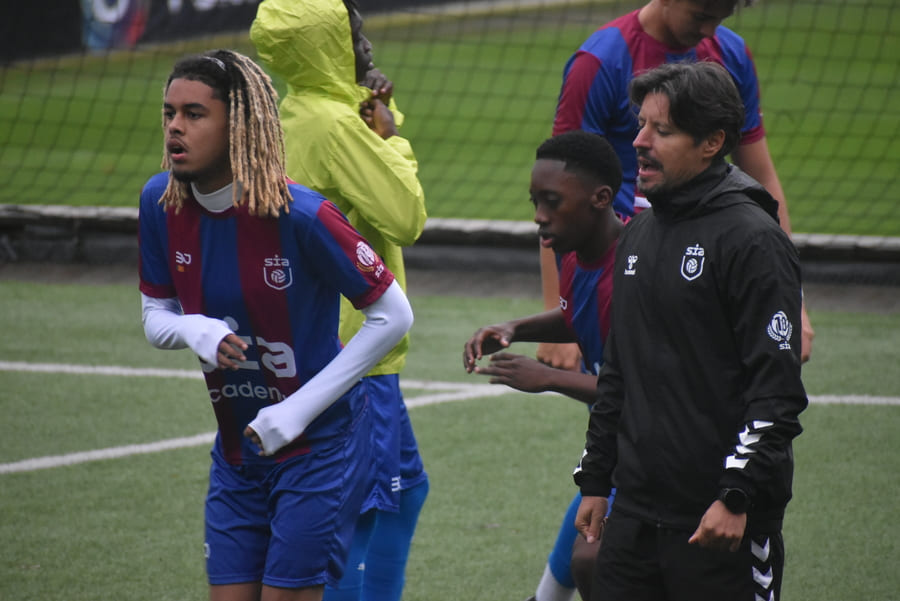
At SIA Academy we integrate willpower training within the footballer’s own development process. We design tasks that generate controlled stress: small-sided games with changing rules, unexpected stimuli, situations that force players to react quickly without losing calm. These exercises push the player to stay centred even when instinct suggests otherwise.
José Luis expresses it in a way our players never forget: “The footballer who trains self-control when the environment is easy will be the one who applies it when the environment becomes extreme.” That’s why we emphasise the creation of mental habits, not just punctual responses. Self-control thus becomes a way of thinking, not just an isolated tool.
Scenarios where self-discipline defines the outcome
There are moments that separate good players from those who leave a mark: a goal conceded in the last minute, a harsh challenge, a hostile crowd, an obvious injustice. In these situations, self-control is the only thing preventing emotional disconnection. Without it, the player loses concentration, makes mistakes or exposes himself to unnecessary sanctions. With it, he maintains tactical structure, stays cool and converts tension into useful competitive energy.
In our academy we have seen talented players fall behind for failing to manage these moments, and others with fewer physical qualities stand out thanks to their self-control. We understand this ability as the one that allows players to see clarity where others see chaos, an advantage that changes matches and careers.
Psychological and tactical benefits of composure
When a footballer develops self-control, his mind becomes more resilient, more analytical and more stable. Psychologically, this reduces anxiety, improves attention and enhances mental recovery after an error. Tactically, it leads to more rational decisions, more effective communication with teammates and a more faithful execution of the game plan, even during critical phases of the match.
Moreover, consistent practice of self-control improves collective cohesion. A single player who remains calm can influence the entire team, creating a stabilising effect that elevates group performance.
Self-restraint beyond the pitch
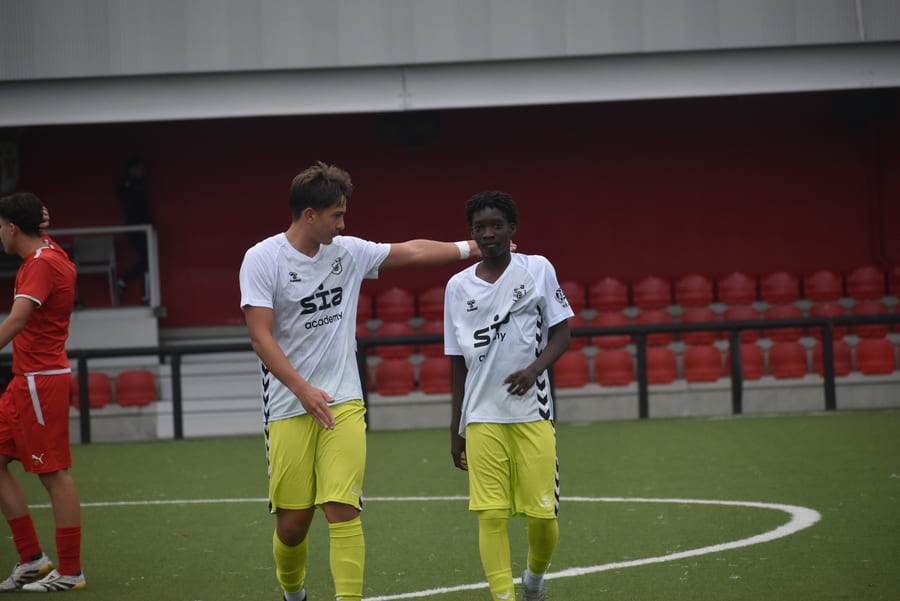
Self-restraint does not end at the end of training nor with the referee’s final whistle. It accompanies the footballer in his daily life—how he manages frustration, how he processes feedback, how he organises his rest and how he responds to external pressure. At SIA Academy we see it as a habit that transforms not only the athlete but also the person.
When the player incorporates this self-control into his routine, his development accelerates: he makes better decisions, stabilises his emotional state and learns to handle situations that used to overwhelm him. This creates a more complete competitive profile, better prepared for the demands of professional football.
Why self-control is our secret weapon
For us, self-control is one of the most differentiating abilities in modern football. A player may have brilliant technique or extraordinary power, but without self-control he will be unable to exploit that talent when pressure appears. Conversely, a footballer with self-control can multiply his performance, sustain his game and lead the team even without being the star.
Furthermore, this skill has a direct impact on team stability: a player who maintains calm transmits security, order and direction.
Self-control as a path to excellence
At SIA Academy we are convinced that self-control is a true secret weapon for reaching the highest level. It’s not just about competing; it’s about competing with intention, with balance and with intelligence. The footballer who masters self-control does not avoid pressure—he turns it into strength. And in a sport where details decide everything, that is a difference that defines careers.