






In today’s football, where every detail is analyzed and every mistake can be amplified within seconds through social media, the ability to maintain mental stability has become just as important as technical skills or physical preparation. Many players seek immediate results, but development processes require something deeper: confidence.
Confidence does not arise by chance, nor does it appear only after a victory. It is built through experiences, habits, learning, and proper emotional management. When a footballer develops this confidence in a solid way, they are able to compete with greater composure, take risks when necessary, and recover more quickly from the inevitable mistakes that are part of the game.
Table of contents
Why footballers confuse confidence with self-assurance
One of the most common mistakes is believing that feeling secure means being prepared for every situation. However, genuine confidence has a much more stable foundation. It does not depend exclusively on results, external opinions, or a positive run of form.
Confidence is not born from believing that everything will go well. It comes from knowing that you have the tools to respond even when things do not go as expected. A player can miss a penalty, lose possession in a decisive moment, or go through a period of lower performance and still maintain a healthy competitive mindset.
As José Luis, the academy’s psychologist, explains:
“The footballer who progresses is not the one who avoids mistakes, but the one who learns how to interpret them correctly.”
This perspective is particularly relevant in modern football, where the pressure to perform appears at increasingly younger ages.
The role of mental preparation
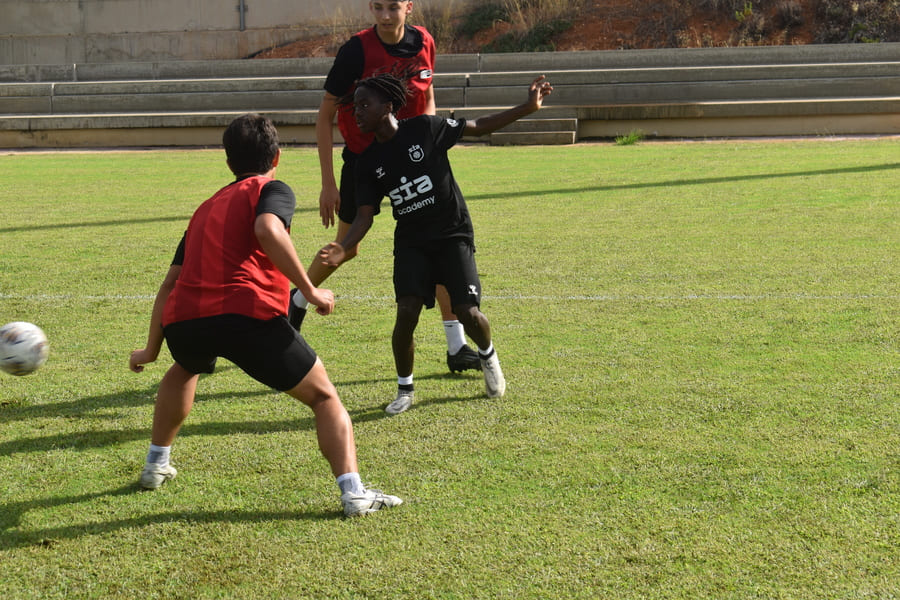
For many years, most sports training focused on physical and technical aspects. Today, we know that the psychological component has a direct influence on performance. Emotional management, concentration, resilience, and adaptability are all part of the comprehensive training required for any athlete who aspires to compete at the highest level.
Confidence grows when a player accumulates positive experiences, but also when they learn to manage negative ones. Every training session represents an opportunity to reinforce behaviors, develop habits, and consolidate a stable competitive identity.
Footballers who consistently work on their mindset tend to develop a resilient confidence that is less dependent on external factors. This allows them to maintain more consistent performances throughout the season and deal more effectively with high-pressure situations.
How we develop it at SIA Academy
At SIA Academy, we understand that a player’s development goes far beyond improving technical or tactical aspects. Our goal is to support every footballer through a complete growth process, where personal and sporting development progress side by side.
For this reason, we work on confidence from a practical and everyday perspective. We do not seek to create an artificial sense of security; instead, we help each player understand their strengths, identify areas for improvement, and build the resources needed to face competitive challenges.
Within our training environment, we encourage responsibility, autonomy, and a willingness to learn. When a footballer understands that mistakes are part of the process, confidence emerges in a more natural and sustainable way.
José Luis, the academy’s psychologist, summarizes this idea clearly:
“Lasting confidence is built when the player learns to value their development above immediate results.”
In addition, we integrate psychological work into the overall training experience so that players develop tools they can apply both on and off the pitch.
The environment also makes a difference
Confidence also depends on the quality of the environment. When a player feels supported, experiences balanced demands, and has clear objectives, their willingness to learn and take responsibility increases. On the other hand, environments based solely on criticism or constant pressure tend to limit development.
That is why we consider it essential to create spaces where learning plays a central role. A suitable environment allows players to experiment, correct mistakes, and develop emotional skills without fear of failure.
Collective confidence is also a determining factor. The most competitive teams are usually made up of players who believe in their work, their teammates, and the process they are building together.
Looking toward the player’s future
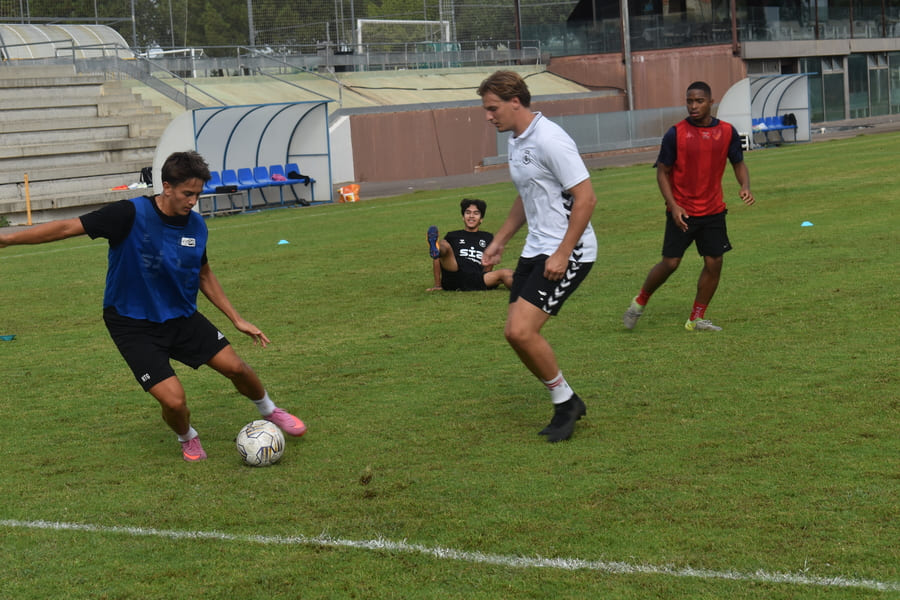
Modern football demands increasingly complete athletes. The speed of the game, media exposure, and constant competition require the development of skills that go beyond purely football-related abilities.
Real confidence is not a passing emotion or an automatic consequence of winning matches. It is a daily construction based on experience, learning, and preparation. When a player develops this confidence in a solid way, their ability to compete, grow, and face the challenges of a sporting career increases significantly.
At SIA Academy, we believe that developing footballers also means developing individuals who can manage pressure, learn from mistakes, and maintain a mindset of continuous improvement. This comprehensive approach allows us to build stronger foundations for both the present and the future of every player, fostering sustainable development that is ready for the demands of modern football.