



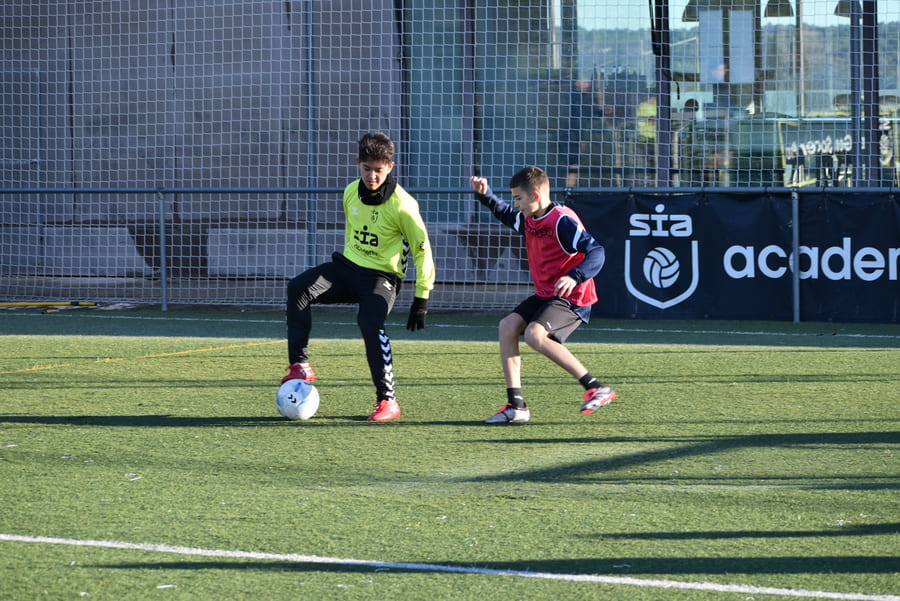

In modern football, a player’s development does not depend solely on natural talent. The difference between a footballer who improves and one who stagnates often lies in an academy’s ability to provide constant, human and personalized monitoring. Every player has different physical, tactical and emotional needs, which is why working individually has become an essential element within any high-performance methodology.
At SIA Academy, we understand that a footballer’s growth requires much more than collective training sessions. Our goal is for every player to receive guidance adapted to their age, position and sporting objectives. For this reason, the monitoring of every training process occupies a central place within our philosophy of work.
Table of contents
The importance of individual monitoring
One of the biggest mistakes in sports development is treating all players in the same way. Although group training is essential, the real leap in quality appears when there is specific monitoring to detect strengths and areas for improvement.
At SIA Academy, we work with physical, technical and tactical evaluation tools that allow us to observe the daily evolution of each footballer. Thanks to this system, we can adapt workloads, correct specific mistakes and enhance the differential abilities of every player.
Furthermore, monitoring is not limited only to the pitch. We also analyze sleeping habits, nutrition and competitive behavior. The integral development of the footballer is key to achieving stable and sustainable performance.
“A player improves faster when they understand that every training session has a concrete and personalized purpose,” explains Alain, coach at SIA Academy.
Communication between coach and player
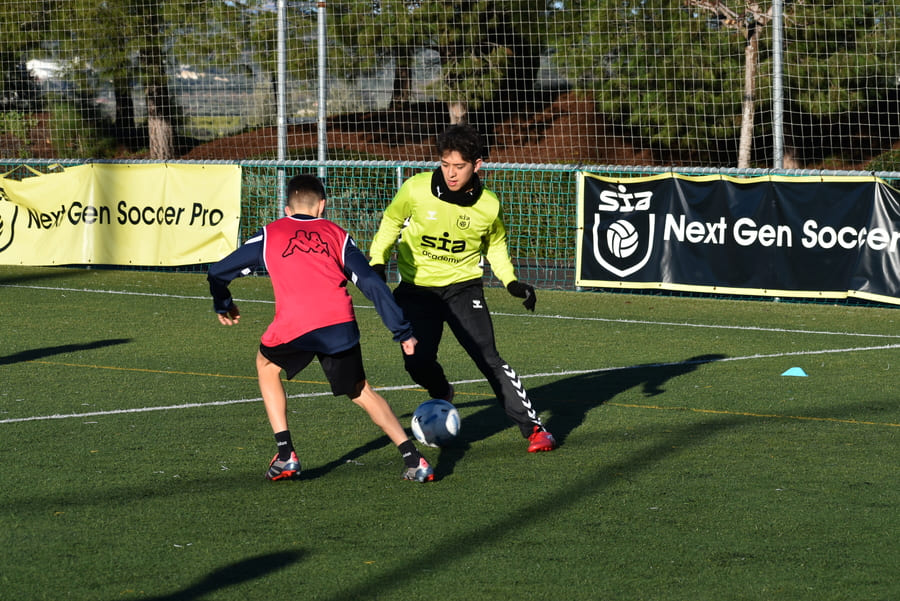
Another fundamental aspect within individual monitoring is communication. Many young footballers need to feel heard and understood in order to develop confidence on the field. A coach who communicates and guides properly can influence both performance and competitive mentality.
At SIA Academy, we encourage regular meetings between players and coaching staff to assess objectives and feelings. This close monitoring helps create an environment of trust where the footballer can express doubts and work on specific aspects of their development.
Communication also makes it possible to detect emotional situations that affect performance. Competitive pressure, lack of playing time or injuries can directly influence a player’s evolution, which is why personalized attention is essential to maintain mental balance.
Technology applied to performance
Today’s football demands precision in every detail. That is why modern monitoring must rely on technological tools capable of providing objective information about a player’s performance.
At SIA Academy, we use video analysis, physical workload control and individual statistics to optimize every training session. Thanks to these resources, we can carry out more accurate monitoring of each footballer’s technical and tactical progress.
Video analysis, for example, allows us to correct specific movements and improve decision-making in different game situations. Likewise, physical data helps prevent injuries and adjust training intensity.
Technology does not replace the coach, but it does multiply the capacity for analysis and personalization within a high-level academy.
The role of consistency in development
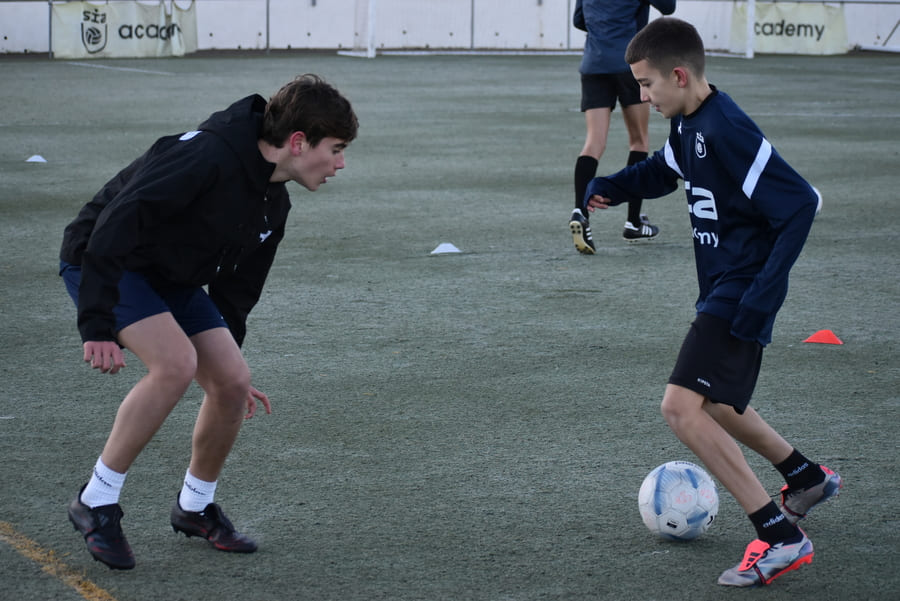
Many players want immediate results, but real development comes through daily discipline. Continuous monitoring makes it possible to identify small improvements that, over time, generate significant progress.
At SIA Academy, we insist on the importance of consistency and patience. A young footballer needs to understand that learning is progressive and that every detail worked on has an impact on their competitive future.
Weekly monitoring makes it easier to establish achievable goals and maintain motivation. In addition, it helps avoid the uncertainty that appears when a player does not know whether they are truly improving.
“Talent opens doors, but consistency and daily work are what keep a player at the highest level,” says Alain.
Adaptation to every training stage
Not all footballers go through the same maturation process. Some stand out physically from an early age, while others develop later. That is why monitoring must adapt to every stage of growth.
At SIA Academy, we design personalized plans according to the player’s age, position and competitive profile. This specific monitoring makes it possible to adjust realistic objectives and avoid unnecessary comparisons within the group.
We also pay special attention to transition periods, such as the step from youth football to competitive football. These stages often define the sporting future of many young players, which is why proper guidance is decisive.
A methodology focused on the footballer
The quality of an academy is measured by its ability to develop people and athletes in a balanced way. Individual monitoring represents a fundamental tool to achieve this, as it allows us to truly understand the needs of every player.
At SIA Academy, we are committed to a methodology where the footballer is at the center of the entire process. Our daily work combines demand, closeness and planning to provide a professional environment focused on integral growth.
Personalized monitoring, constant communication and detailed analysis allow every player to progress with a clear direction. In modern football, making a difference depends as much on talent as on the ability to develop it correctly.