



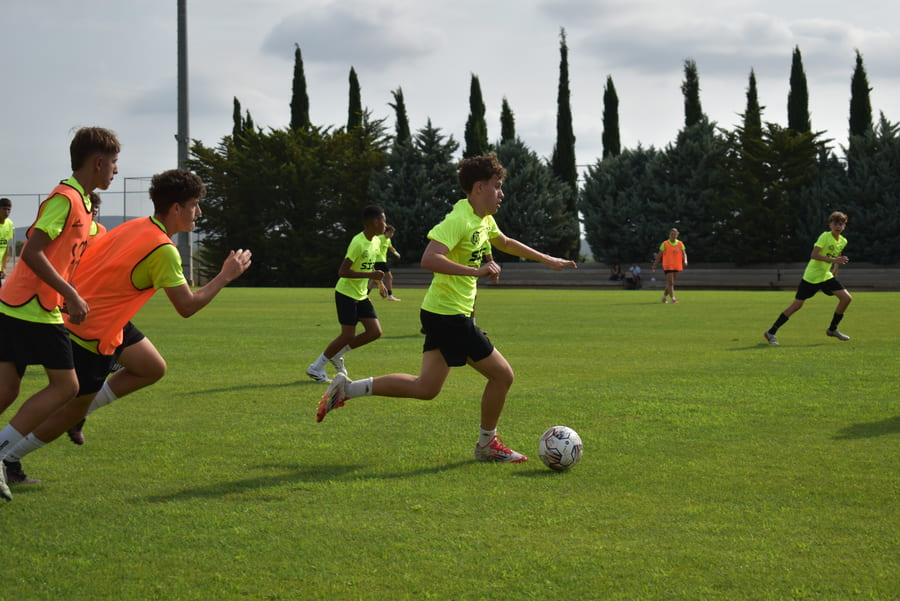

Modern football demands much more than talent. The speed of the game, constant pressure and competitive rhythm force players to maintain a very high physical and mental level in every action. That is why intensity has become one of the most important factors in any professional training session. A footballer who works every exercise with maximum focus and demand has far more chances of improving performance than someone who simply completes the session.
At SIA Academy, we understand that a player’s growth depends on how they train daily. It is not enough to repeat exercises; they must be executed with energy, commitment and a competitive mindset. Every task on the pitch represents an opportunity to evolve and move closer to the level required by modern football.
Intensity in training sessions not only improves the physical aspect. It also helps players make faster decisions, increases reaction capacity and prepares them to compete under pressure. When a footballer becomes used to working at a high level during the week, they can respond more naturally in matches.
Table of contents
The intensity of modern football
The game has changed a lot in recent years. Spaces are tighter, transitions are faster and every action requires immediate precision. In this context, intensity makes huge differences between players with similar abilities.
At SIA Academy, we work so that our players learn to maintain a high rhythm in every exercise. We believe that training with constant demand helps develop essential competitive habits for high performance. From rondos to small-sided games, every task has a clear objective: preparing the player to respond to real match situations.
Many young players think improvement depends only on individual technique, but the reality is that professional football demands continuity and permanent effort. Intensity during sessions helps technical abilities appear even under fatigue or pressure.
“The player who learns to train hard every day develops a much more competitive mindset,” explains José Luis, coach at the academy.
In addition, training with energy improves communication on the pitch and increases collective concentration. Teams that maintain a demanding dynamic during the week usually show greater confidence and coordination in official matches.
The value of every exercise
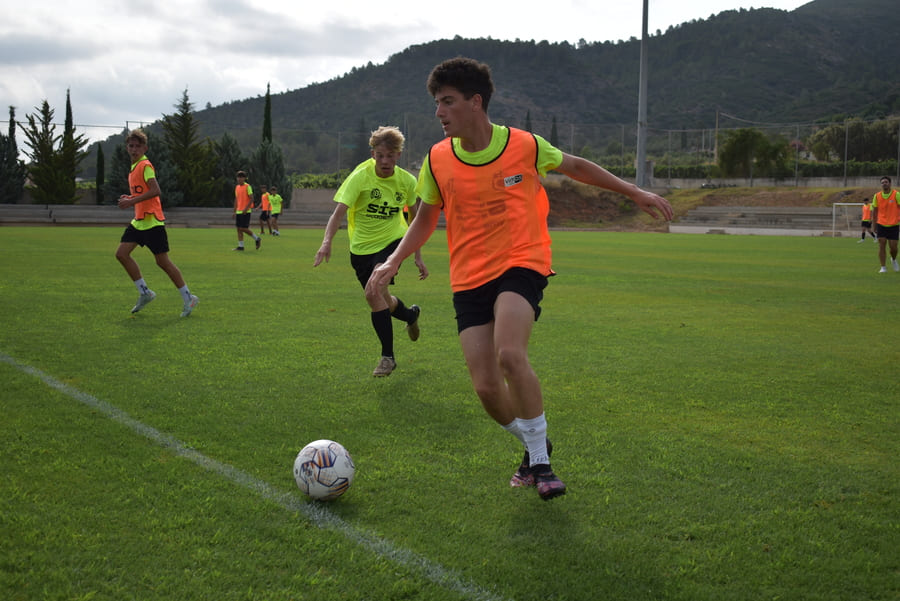
One of the most common mistakes in youth football is performing exercises without the right attitude. Some players expect only important matches to define their progress, when in reality improvement is built daily in every training session. Intensity must appear in every detail, even in seemingly simple actions.
In our methodology, we place great importance on execution quality. Every pass, every run and every press must be performed with the same competitive mindset required in a match. This way of training allows players to automate movements and improve decision-making.
Intensity is also closely related to discipline. A footballer who maintains effort throughout the session learns to live with demand and develops greater resilience. This mental aspect is decisive for those aiming to reach higher competitive levels.
At SIA Academy, we promote dynamic and demanding training sessions where players are constantly involved. Our intention is for every footballer to understand that improvement depends on their daily attitude and their ability to compete even in the smallest exercises.
“When a player drops the rhythm in training, they also reduce their chances of growing,” highlights José Luis.
Physical and mental preparation
Intensity is not only about running faster or making explosive efforts. It also involves staying focused, reacting correctly and making the right decisions under fatigue. That is why the mental component is extremely important in modern training.
At SIA Academy, we work so that players develop physical endurance and psychological strength at the same time. Football demands players capable of handling constant pressure and responding with personality in difficult situations. This preparation is built daily through competitive training and real game scenarios.
Another important aspect is adaptability. Players must get used to changes in pace, reduced spaces and fast transitions. Intensity helps players adapt better to these contexts and respond naturally during matches.
In addition, maintaining a high level of demand improves collective growth. Training sessions become more competitive, players raise each other’s level and the group environment becomes much more positive and professional.
The difference between training and competing
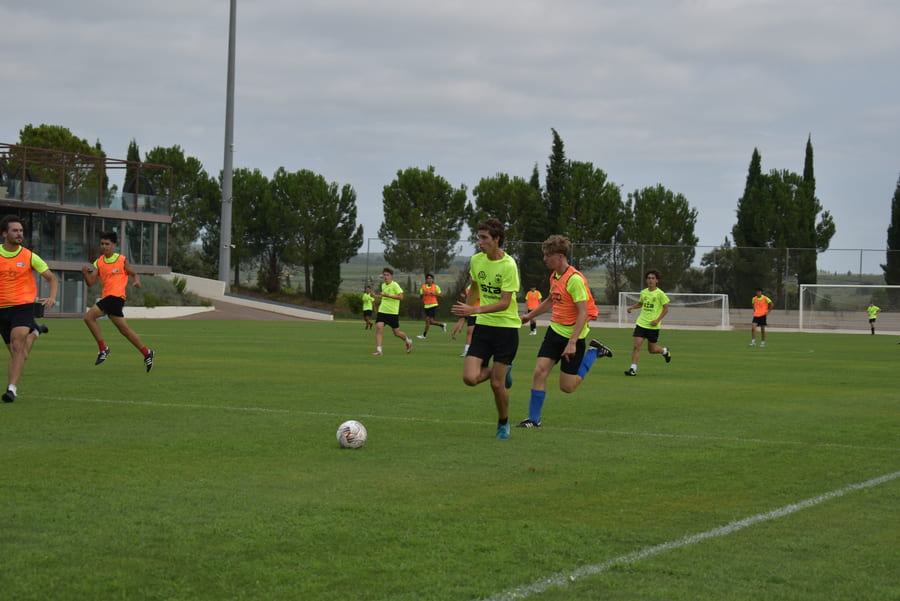
Many footballers completely separate training from competition, when in reality both concepts must be connected. Intensity during the week often determines performance at the weekend. A player used to training at maximum effort has more physical and mental resources to face complex match situations.
At our academy, we want every session to represent a constant challenge. We believe improvement happens when the player steps out of their comfort zone and learns to compete in every exercise. That is why we design training sessions where rhythm, focus and demand are present from start to finish.
Intensity also improves individual confidence. When a player feels physically prepared and knows they have trained at their best, they approach matches with a much stronger mindset. That confidence is reflected in decision-making and in the ability to take responsibility on the pitch.
At SIA Academy, we follow a methodology focused on the holistic development of the footballer. Our goal is to form players capable of responding to the demands of modern football both physically and mentally. Daily intensity, collective commitment and a competitive mindset are fundamental pillars of our way of understanding training.