




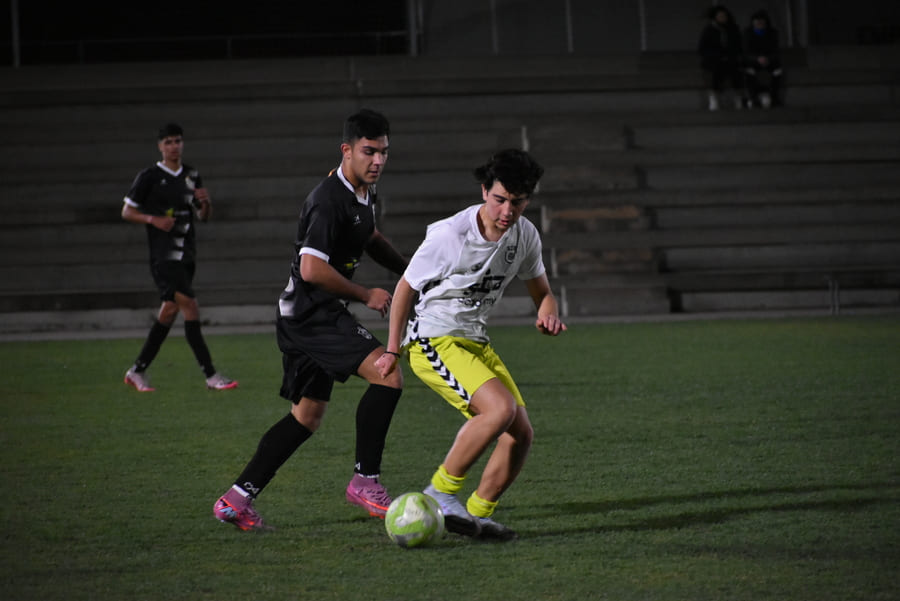

Talking about physical preparation in football is often reduced to a simple question: what is more important, strength or speed? However, the reality is much more complex. It is not about choosing one quality and discarding the other, but about understanding how they evolve with age and how they should be integrated within a coherent developmental process.
In modern football, speed makes the difference in decisive actions: a run into space, a press after losing possession, or a defensive recovery. But that speed does not come from nowhere. It is supported by adequate levels of strength, coordination, and body control. Optimal performance appears when both qualities are developed at the right time and with the correct progression.
Table of contents
Before puberty: moving better before getting stronger
At early ages, the goal is not to increase muscle mass or generate high levels of tension. The focus is on movement quality. Coordination, balance, and agility form the base upon which strength and speed will later be built.
Pace at these stages is mainly developed through reaction and play. Short runs, spontaneous changes of direction, and varied stimuli improve speed without the need for complex structured methods. The richer the motor environment, the greater the adaptive capacity of the nervous system.
The priority is not for the child to be stronger than teammates, but to learn to control their body in any situation. Jumps, single-leg supports, and multidirectional movements provide functional strength adapted to their age.
Ximo, the academy’s fitness coach, explains it clearly: “In childhood we seek efficiency, not maximum power. If the movement pattern is correct, speed will arrive naturally.”
The transition period: growth and readjustment
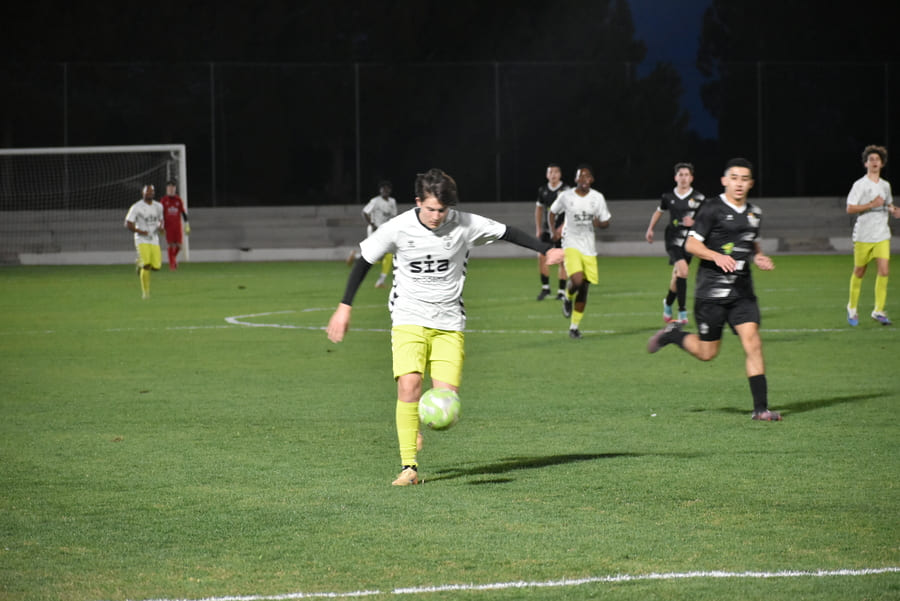
Adolescence brings hormonal changes that favor strength development. This is a strategic phase. If training is well planned, the combination of strength and pace can enhance the player’s explosive capacity. If not, imbalances and injuries may appear.
During the growth spurt, many players feel they have lost pace. In reality, their body is adapting to new proportions. That is why reinforcing running technique and stabilizing strength work is essential. Speed must be trained with special attention to mechanics, posture, and intermuscular coordination.
At SIA Academy we evaluate each footballer individually to adjust loads. We do not rely solely on chronological age, but on maturation indicators. Individualizing training is essential so that strength drives speed rather than limits it.
Ximo often reminds us during internal sessions: “Strength is the structural support of speed. Without a solid base, the body cannot express its full potential.”
Competitive stage: integrating speed and strength at the highest level
In youth elite categories and stages close to high performance, training becomes more specific. Strength is developed through power-oriented methods: multi-joint exercises, preventive eccentric work, and loads adapted to the player’s position.
Speed is no longer understood only as linear capacity. In football, pace involves perception, decision, and execution. Cognitive speed becomes a differentiating factor. A player who reads the play earlier can compensate for lower pure pace with better anticipation.
At this stage, strength and speed must be integrated within the game model. We do not train isolated abilities, but transferable actions to the pitch: sprints after a pass, accelerations with opposition, decelerations, and changes of pace under pressure.
In our methodology we combine gym sessions with specific field tasks where speed appears contextualized. We aim for every physical improvement to have a real impact on competition.
Is there a universal priority?
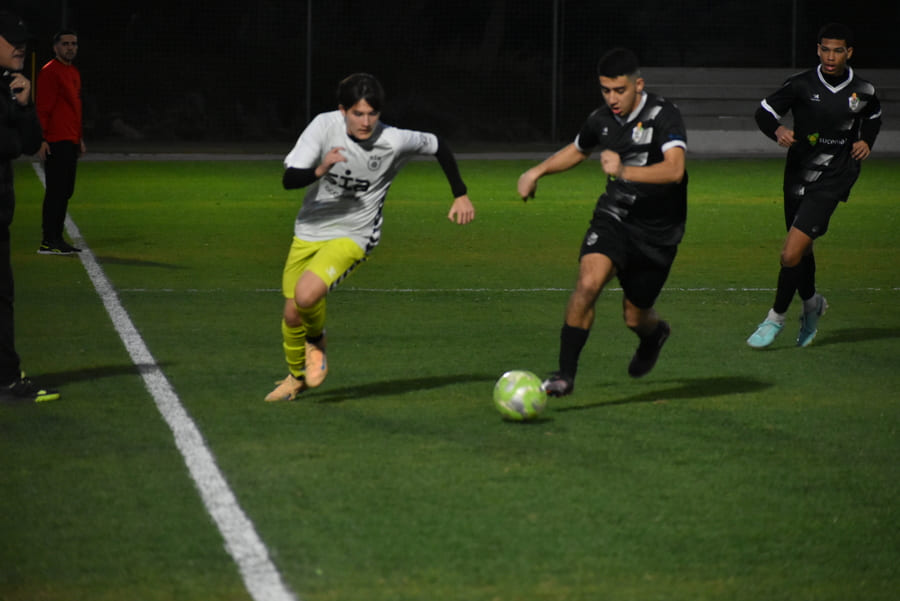
There is no single answer. Pace is present at all ages, but its focus changes. In early stages it is stimulated through coordination and reaction; in adolescence it is balanced with progressive strength development; at advanced levels it is optimized through power training and decision-making.
The same applies to strength. First it is functional and bodyweight-based; later it becomes structured; finally it is oriented toward maximum performance. Speed, far from opposing strength, depends largely on it.
An excessive premature emphasis on strength can limit mobility and affect speed. Likewise, seeking maximum speed without a solid base can increase injury risk. The dynamic balance between both qualities is what guarantees sustainable progression.
A long-term vision
Physical development in football cannot be understood as a race against time. Biological processes need time. Respecting growth stages allows strength to consolidate and speed to evolve without negative interference.
At SIA Academy we advocate for long-term planning where each phase fulfills a specific function. We believe that developing a complete footballer means understanding their physical, emotional, and competitive evolution.