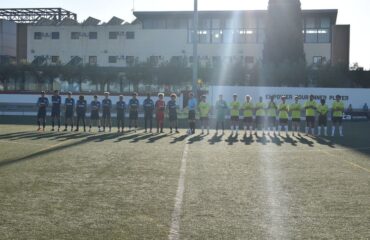






Football is much more than a sport: it is a mirror where collective values, conflicts, and aspirations are projected. In every match, dynamics appear that also exist outside the field, from cooperation to competition, from justice to social pressure. Therefore, understanding football as a representation of society allows it to be used as an educational tool to shape not only better players, but better people.
At SIA Academy we work with young people from different cultures and backgrounds, which turns the locker room into a small society in itself. Living together, respecting rules, managing frustrations, and collaborating with teammates are lessons that go beyond sport. When a player understands that their behavior affects the group, they begin to develop essential skills to integrate positively into society.
Table of contents
Values that connect the field with society
In football, individual talent matters, but success depends on the collective. This idea reflects how society works: personal achievements are enhanced when they contribute to the common good. The game teaches that no one wins alone and that every role, no matter how discreet, has an impact on the final result.
José Luis, the academy’s psychologist, explains it this way: “The team functions as a social laboratory where young people experience situations very similar to those they will encounter in adult society.” They learn to respect the authority of the referee, to accept decisions they do not always consider fair, and to coexist with teammates who are different from them.
Football also shows the importance of shared rules. Without clear regulations, the game becomes chaotic, just as society does when limits are absent. Understanding this helps young people value discipline not as an imposition, but as a condition for coexistence.
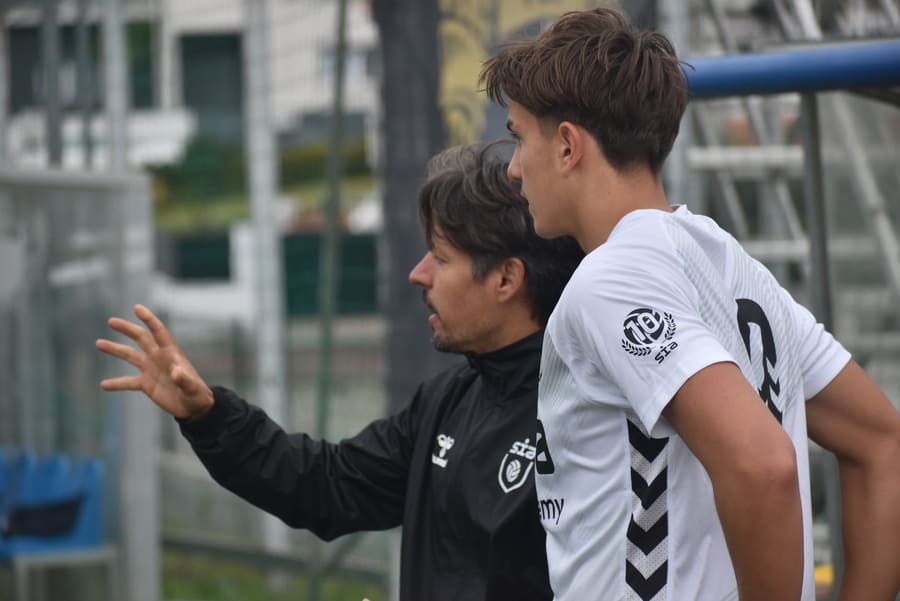
Emotional management and social pressure
Every match involves intense emotions: joy, frustration, fear of making mistakes, or euphoria from success. These experiences reproduce, on a smaller scale, the tensions of contemporary society. Learning to manage these emotions on the field prepares young people to face personal, academic, and professional challenges.
From our experience, we observe that those who develop sporting self-control also show greater resilience in their daily life within society. Knowing how to lose, for example, is a fundamental lesson. In a competitive environment, accepting defeat without aggression or excuses is a sign of maturity.
José Luis adds: “When a player learns to channel frustration without harming the team, they are acquiring a key skill for living in society.” This capacity for emotional regulation reduces conflict and improves interpersonal communication.
Diversity and inclusion
Teams bring together young people from different countries, cultures, and socioeconomic levels, reproducing the diversity of global society. The locker room becomes a space where differences stop being barriers and become opportunities for mutual learning.
At our academy, we promote activities that encourage intercultural respect because we understand that football can break down prejudices present in society. Sharing common goals fosters empathy and reduces the tendency to judge others based on their origin.
Inclusion also means recognizing different development rhythms. Not all players evolve at the same pace, just as in society people progress at different speeds. Learning to support a teammate going through difficulties strengthens cohesion and a sense of community.
Individual responsibility within the collective
One of the most valuable lessons of football is that every action counts. A lost ball, a defensive cover, or an accurate pass can change the outcome. This principle reflects how individual decisions influence society as a whole. Sport teaches that personal responsibility does not disappear within the group, but becomes even more relevant.
When a young person understands that their effort benefits everyone, they develop commitment. Arriving on time, taking care of nutrition, or training with intensity improves not only their performance but also the team’s. This mindset is transferable to society, where civic responsibility sustains collective functioning.
Leadership and cooperation
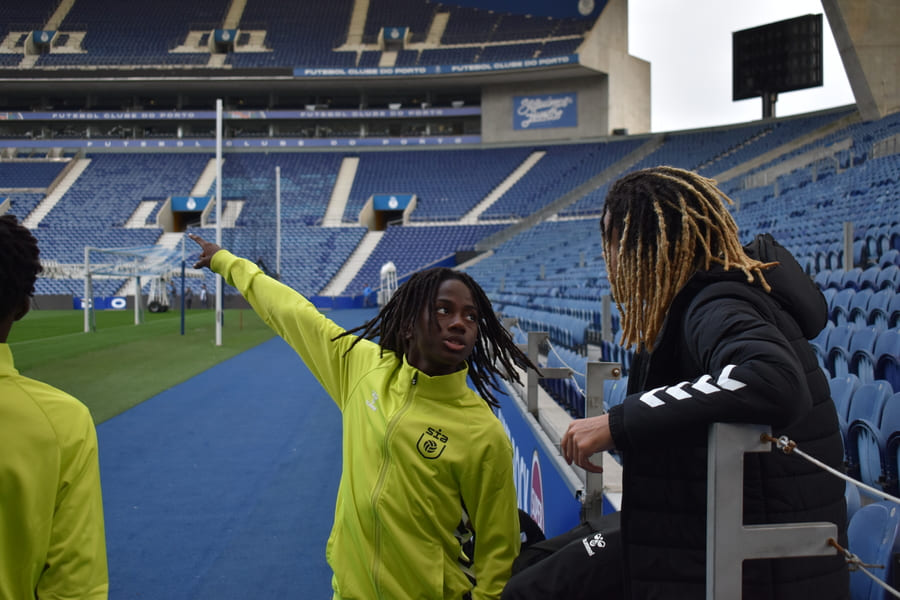
Football offers multiple forms of leadership: the captain who guides with words, the player who leads by example, or the one who brings energy at critical moments. These dynamics reflect structures present in society, where effective leadership combines authority and service. Learning to lead without imposing and to follow without losing judgment is a fundamental social competence.
Beyond the result
The score matters, but it is not everything. The learning process, sporting ethics, and respect for the opponent have deep formative value. When football is oriented toward holistic education, it becomes a powerful tool for building responsible citizens.
In our philosophy, winning is positive, but shaping balanced individuals is the priority. Behavior in victory and defeat reveals much about preparation for society. Celebrating with respect and losing with dignity are signs of maturity.